-
Mon-Fri: 10AM to 8PM 01722665665
-
My Account
-
-
0
Total :
₹ 0.00

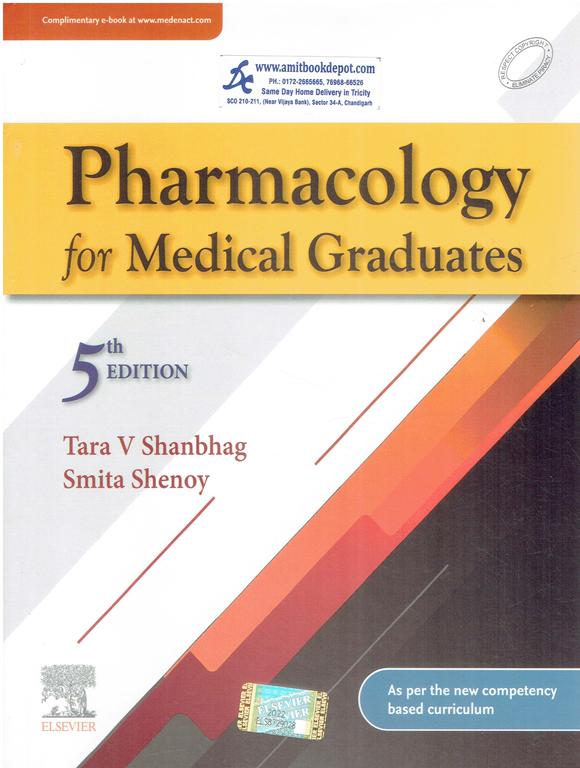
Pharmacology for Medical Graduates (Tara V. Shanbhag & Smita Shenoy, Elsevier) is a concise, exam-focused book covering general pharmacology, drug dosage forms, dosage calculation, and systemic therapeutics, including autonomic, renal, cardiovascular, CNS, endocrine, and chemotherapy agents. Designed for MBBS students preparing for NEXT, FMGE, and university exams, this book integrates clinical pearls, drug interactions, adverse effects, and rational prescribing. Key features include tables, flowcharts, MCQs, and dosage calculation exercises. The appendix and index enable quick navigation. Ideal for last-minute revision and clinical rotations, this Elsevier publication ensures competency in rational pharmacotherapy and patient safety.





General Pharmacology covers pharmacokinetics (ADME) and pharmacodynamics (receptor theory, dose-response), forming the foundation for understanding all subsequent drug classes.
Yes, Chapter 3 exclusively covers Calculation of Dosage of Drugs with practical examples, including formulas for pediatric, body weight, and body surface area-based dosing.
Chapter 4 on Autonomic Pharmacology details cholinergic agonists, anticholinergics, adrenergic agonists, beta-blockers, and their clinical applications for vegetative functions.
Chapter 5 classifies loop diuretics, thiazides, potassium-sparing, and osmotic diuretics, explaining their sites of action, adverse effects, and use in hypertension and edema.
Chapter 6 covers antihypertensives, antianginal drugs, antiarrhythmics, cardiac glycosides, and vasodilators with mechanisms and clinical indications.
Chapter 8 covers histamine, antihistamines, leukotrienes, prostaglandins, bronchodilators (beta-agonists, theophylline), and corticosteroids for asthma and allergy.
Chapter 10 describes heparin, low-molecular-weight heparin, warfarin, direct oral anticoagulants, antiplatelet drugs (aspirin, clopidogrel), and thrombolytics.
Chapter 11 covers insulin preparations, sulfonylureas, metformin, DPP-4 inhibitors, SGLT2 inhibitors, and management of diabetic complications.
Chapter 12 details antimicrobial classification, resistance mechanisms, antitubercular drugs, antimalarials, antivirals, antifungals, and antineoplastics.
Yes, each chapter features MCQs, clinical case-based questions, and high-yield fact tables aligned with CBME and national licensing exam patterns.
General Pharmacology covers pharmacokinetics (ADME) and pharmacodynamics (receptor theory, dose-response), forming the foundation for understanding all subsequent drug classes.
Yes, Chapter 3 exclusively covers Calculation of Dosage of Drugs with practical examples, including formulas for pediatric, body weight, and body surface area-based dosing.
Chapter 4 on Autonomic Pharmacology details cholinergic agonists, anticholinergics, adrenergic agonists, beta-blockers, and their clinical applications for vegetative functions.
Chapter 5 classifies loop diuretics, thiazides, potassium-sparing, and osmotic diuretics, explaining their sites of action, adverse effects, and use in hypertension and edema.
Chapter 6 covers antihypertensives, antianginal drugs, antiarrhythmics, cardiac glycosides, and vasodilators with mechanisms and clinical indications.
Chapter 8 covers histamine, antihistamines, leukotrienes, prostaglandins, bronchodilators (beta-agonists, theophylline), and corticosteroids for asthma and allergy.
Chapter 10 describes heparin, low-molecular-weight heparin, warfarin, direct oral anticoagulants, antiplatelet drugs (aspirin, clopidogrel), and thrombolytics.
Chapter 11 covers insulin preparations, sulfonylureas, metformin, DPP-4 inhibitors, SGLT2 inhibitors, and management of diabetic complications.
Chapter 12 details antimicrobial classification, resistance mechanisms, antitubercular drugs, antimalarials, antivirals, antifungals, and antineoplastics.
Yes, each chapter features MCQs, clinical case-based questions, and high-yield fact tables aligned with CBME and national licensing exam patterns.