-
Mon-Fri: 10AM to 8PM 01722665665
-
My Account
-
-
0
Total :
₹ 0.00

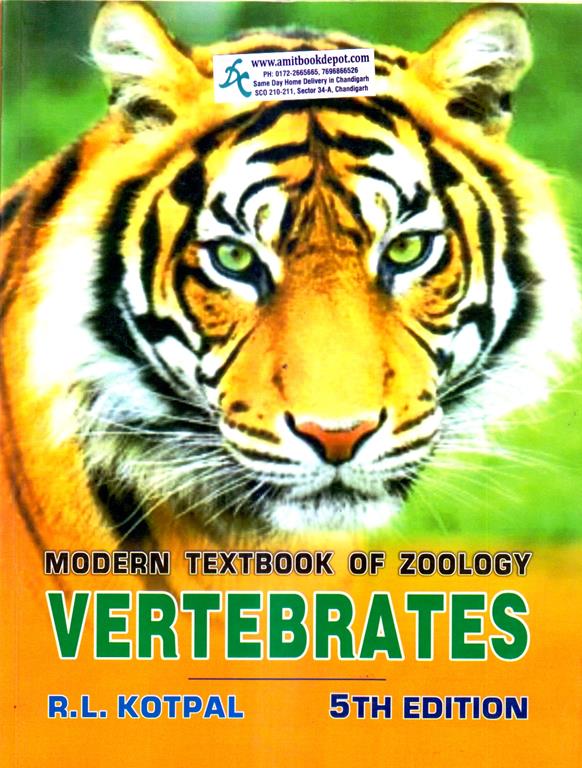


Balanoglossus (tongue worm), Herdmania (sea-squirt), and Branchiostoma (Amphioxus) are covered as representative types of Hemichordata, Urochordata, and Cephalochordata.
Yes. Ostracodermi and Placodermi, both extinct jawless and jawed armored fishes, are described separately before modern cyclostomes and gnathostomes.
Yes. Development of frog (Rana tigrina) is detailed alongside development of Balanoglossus, Herdmania, Branchiostoma, chick, and rabbit.
Uromastix hardwickii (spiny-tailed lizard) and Calotes versicolor (garden lizard), with a separate general account of snakes.
Yes. Prototheria (Monotremata), Metatheria (Marsupialia), and Eutheria are explained, with Oryctolagus (rabbit) as the type of Mammalia.
Endoskeleton of Scoliodon, Labeo, frog, Varanus, fowl, and rabbit are described for comparative vertebrate anatomy labs.
Yes. A dedicated chapter on placentation in mammals covers types of placenta, structure, and function within vertebrate embryology.
Integument, endoskeleton, digestive, respiratory, circulatory, urinogenital, neural, receptor, and endocrine systems are compared.
Yes. A separate chapter on wildlife of India discusses conservation status, protected areas, and endemic vertebrate species.
Covers entire vertebrate zoology, comparative anatomy, embryology, and osteology in 60 chapters—ideal for CSIR NET, GATE, and state PCS exams.
No Description Added
Balanoglossus (tongue worm), Herdmania (sea-squirt), and Branchiostoma (Amphioxus) are covered as representative types of Hemichordata, Urochordata, and Cephalochordata.
Yes. Ostracodermi and Placodermi, both extinct jawless and jawed armored fishes, are described separately before modern cyclostomes and gnathostomes.
Yes. Development of frog (Rana tigrina) is detailed alongside development of Balanoglossus, Herdmania, Branchiostoma, chick, and rabbit.
Uromastix hardwickii (spiny-tailed lizard) and Calotes versicolor (garden lizard), with a separate general account of snakes.
Yes. Prototheria (Monotremata), Metatheria (Marsupialia), and Eutheria are explained, with Oryctolagus (rabbit) as the type of Mammalia.
Endoskeleton of Scoliodon, Labeo, frog, Varanus, fowl, and rabbit are described for comparative vertebrate anatomy labs.
Yes. A dedicated chapter on placentation in mammals covers types of placenta, structure, and function within vertebrate embryology.
Integument, endoskeleton, digestive, respiratory, circulatory, urinogenital, neural, receptor, and endocrine systems are compared.
Yes. A separate chapter on wildlife of India discusses conservation status, protected areas, and endemic vertebrate species.
Covers entire vertebrate zoology, comparative anatomy, embryology, and osteology in 60 chapters—ideal for CSIR NET, GATE, and state PCS exams.