-
Mon-Fri: 10AM to 8PM 01722665665
-
My Account
-
-
0
Total :
₹ 0.00

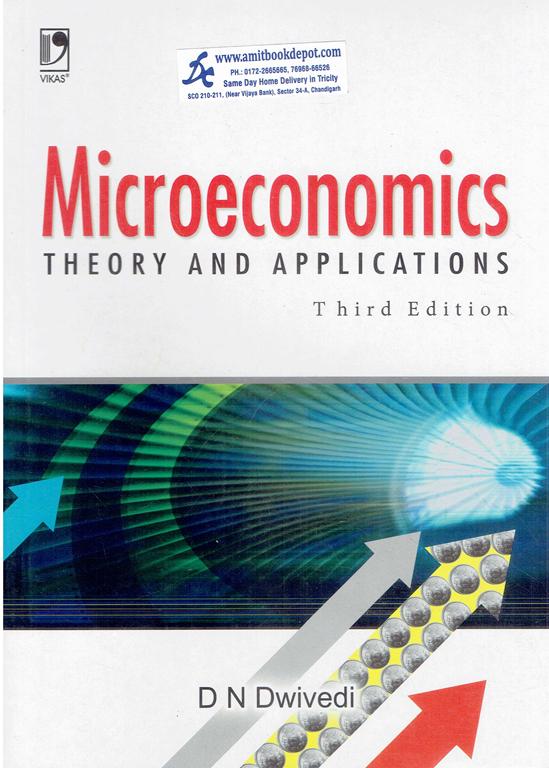




The book explains demand and supply as core market forces, including determinants of demand, supply shifts, and market equilibrium formation under different scenarios.
Cardinal utility measures satisfaction in numbers (utils), while ordinal utility ranks preferences using indifference curves. The book covers both theories of consumer demand comprehensively.
It states that increasing one input while keeping others constant eventually yields diminishing marginal returns. Chapter 11 provides graphical and tabular analysis.
Producer equilibrium is achieved at the optimum combination of inputs where isocost line is tangent to isoquant, maximizing output for a given cost.
Yes. Chapter 21 explains game theory of oligopoly, including prisoner’s dilemma, dominant strategy, and Nash equilibrium in strategic business decisions.
Under perfect competition, wage equals marginal revenue product (MRP) of labor. The book discusses demand-supply of labor and industry wage determination.
Consumer surplus is the difference between what a consumer is willing to pay and what they actually pay. Chapter 10 covers its measurement and applications.
Market failure occurs when free markets allocate resources inefficiently. Chapter 33 covers externalities, public goods, and the need for government intervention.
Yes. Chapter 27 links interest rate theories with investment decisions, explaining net present value (NPV) and marginal efficiency of capital concepts.
Short-run costs include fixed and variable inputs; long-run costs have all inputs variable. Chapter 13 derives cost curves for both periods.
No Description Added
The book explains demand and supply as core market forces, including determinants of demand, supply shifts, and market equilibrium formation under different scenarios.
Cardinal utility measures satisfaction in numbers (utils), while ordinal utility ranks preferences using indifference curves. The book covers both theories of consumer demand comprehensively.
It states that increasing one input while keeping others constant eventually yields diminishing marginal returns. Chapter 11 provides graphical and tabular analysis.
Producer equilibrium is achieved at the optimum combination of inputs where isocost line is tangent to isoquant, maximizing output for a given cost.
Yes. Chapter 21 explains game theory of oligopoly, including prisoner’s dilemma, dominant strategy, and Nash equilibrium in strategic business decisions.
Under perfect competition, wage equals marginal revenue product (MRP) of labor. The book discusses demand-supply of labor and industry wage determination.
Consumer surplus is the difference between what a consumer is willing to pay and what they actually pay. Chapter 10 covers its measurement and applications.
Market failure occurs when free markets allocate resources inefficiently. Chapter 33 covers externalities, public goods, and the need for government intervention.
Yes. Chapter 27 links interest rate theories with investment decisions, explaining net present value (NPV) and marginal efficiency of capital concepts.
Short-run costs include fixed and variable inputs; long-run costs have all inputs variable. Chapter 13 derives cost curves for both periods.