Categories
College Bookssss >
BA PU Chandigarh
BSC PU Chandigarh
MSC PU Chandigarh
BBA PU Chandigarh
MA PU Chandigarh
Medical Books
Engineering Books
Management Books
PGDCA Books
BCOM PU Chandigarh
MCOM PU Chandigarh
BCA PU Chandigarh
MCA PU Chandigarh
animate-books

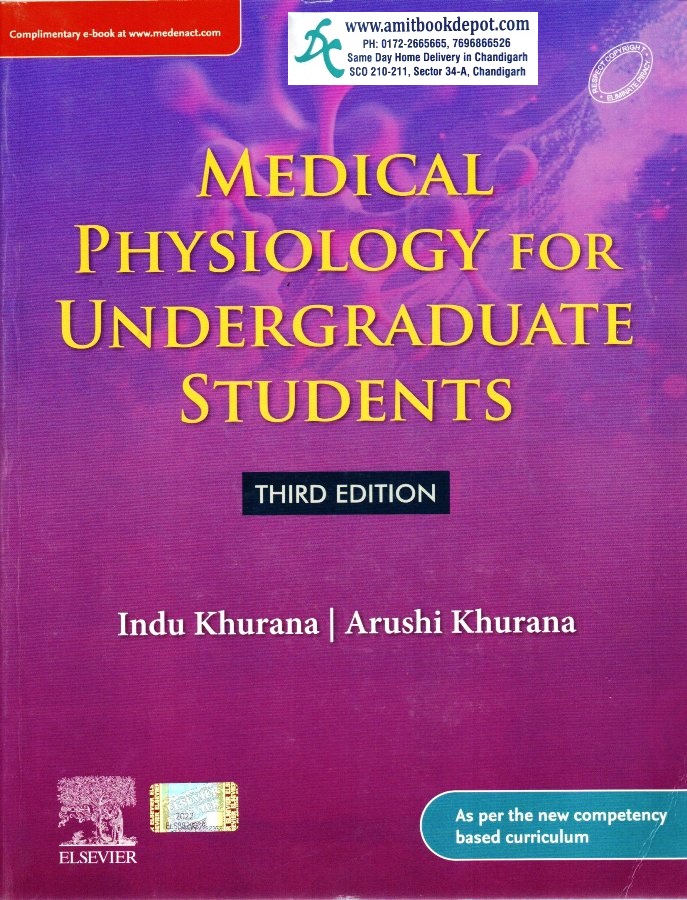
Medical Physiology For Undergraduate Students

by Madhurima
₹1950 ₹1,950.00(-/ off)

Rating & Reviews

23 Customer Review

Medical Physiology For Undergraduate Students by Indu Khurana and Arushi Khurana (Elsevier) is a complete, exam-ready book that simplifies cell physiology, nerve-muscle physiology, and all major organ systems. This book provides clear explanations of cardiovascular physiology; renal physiology, including acid-base balance; respiratory physiology, with gas transport; and gastrointestinal physiology, covering digestion and absorption. Detailed sections on the endocrine system, reproductive physiology, the nervous system, and special senses (vision, hearing, smell, and taste) make it a one-stop resource. Key topics such as the blood and immune system, haemostasis and blood coagulation, electrocardiography (ECG), and acid-base balance are presented with clinical correlations.

Have Doubts Regarding This Product ? Ask Your Question

  • Q1
    What does General Physiology cover in this book?
    A1

    It covers functional organisation of the human body, cell physiology, transport through cell membrane, and membrane potential, establishing the foundation for understanding all organ systems.

  • Q2
    How is nerve-muscle physiology explained?
    A2

    The book details nerve function, neuromuscular junction, skeletal muscle contraction, and smooth and cardiac muscle physiology with clear mechanisms of excitation-contraction coupling.

  • Q3
    What haematology topics are included?
    A3

    Plasma proteins, red blood cells with anaemias, white blood cells, immune mechanisms, platelets, haemostasis, blood coagulation, blood groups and transfusion are covered.

  • Q4
    Does it explain electrocardiography (ECG)?
    A4

    Yes, the cardiovascular section includes origin and spread of cardiac impulse, ECG, cardiac cycle, cardiac output, venous return and haemodynamics.

  • Q5
    What aspects of respiratory physiology are discussed?
    A5

    Pulmonary ventilation, circulation, diffusion, gas transport, regulation of respiration, applied aspects, and exercise physiology are explained in detail.

  • Q6
    How is renal physiology presented?
    A6

    Glomerular filtration, tubular transport, urine concentration, dilution, acidification, body fluid regulation, acid-base balance, renal function tests, and micturition.

  • Q7
    Are gastrointestinal hormones included?
    A7

    Yes, the endocrine section specifically covers pancreatic and gastrointestinal hormones alongside adrenal, thyroid and pituitary gland functions.

  • Q8
    Does it cover the autonomic nervous system?
    A8

    Yes, a dedicated chapter explains the autonomic nervous system along with synaptic transmission and somatic motor system.

  • Q9
    What aged physiology topics are included?
    A9

    Geriatric physiology, physiology of foetus, neonate, childhood, and growth with behavioural development are covered.

  • Q10
    Does the book discuss cerebral blood flow?
    A10

    Yes, it covers meninges, cerebrospinal fluid, blood-brain barrier and cerebral blood flow under the nervous system section.


0.00

0 Overall Rating
  • 5
    0
  • 4
    0
  • 3
    0
  • 2
    0
  • 1
    0

Try this product & share your review & thoughts

SECTION I: GENERAL PHYSIOLOGY

1. Functional Organisation, Composition and Internal Environment of the Human Body
2. The Cell Physiology
3. Transport Through Cell Membrane
4. Membrane Potential

SECTION II: NERVE-MUSCLE PHYSIOLOGY

1. The Nerve
2. Neuromuscular Junction
3. Skeletal Muscle
4. Smooth Muscle and Cardiac Muscle

SECTION III: BLOOD AND IMMUNE SYSTEM

1. Plasma and Plasma Proteins
2. Red Blood Cells and Anaemias
3. White Blood Cells
4. Immune Mechanisms
5. Platelets, Haemostasis and Blood Coagulation
6. Blood Groups and Blood Transfusion

SECTION IV: CARDIOVASCULAR SYSTEM

1. Functional Anatomy of Heart and Physiology of Cardiac Muscle
2. Origin and Spread of Cardiac Impulse and Electrocardiography
3. Heart as a Pump: Cardiac Cycle, Cardiac Output and Venous Return
4. Dynamics of Circulation: Pressure and Flow of Blood and Lymph
5. Cardiovascular Regulation
6. Regional Circulation
7. Cardiovascular Homeostasis in Health and Disease

SECTION V: RESPIRATORY SYSTEM

1. Respiratory Tract: Structure and Functions
2. Pulmonary Ventilation
3. Pulmonary Circulation
4. Pulmonary Diffusion
5. Transport of Gases
6. Regulation of Respiration
7. Respiration: Applied Aspects
8. Physiology of Exercise

SECTION VI: EXCRETORY SYSTEM

1. Kidneys: Functional Anatomy and Blood Flow
2. Mechanism of Urine Formation: Glomerular Filtration and Tubular Transport
3. Concentration, Dilution and Acidification of Urine
4. Regulation of Body Fluid Osmolality, Composition and Volume
5. Physiology of Acid-Base Balance
6. Applied Renal Physiology Including Renal Function Tests
7. Physiology of Micturition

SECTION VII: GASTROINTESTINAL SYSTEM

1. Functional Anatomy and General Principles of Functions of Gastrointestinal System
2. Physiological Activities in Mouth, Pharynx and Oesophagus
3. Physiological Activities in Stomach
4. Pancreas, Liver and Gallbladder
5. Physiological Activities in Small Intestine
6. Physiological Activities in Large Intestine
7. Digestion and Absorption

SECTION VIII: ENDOCRINE SYSTEM

1. General Principles of Endocrine System
2. Endocrinal Functions of Hypothalamus and Pituitary Gland
3. Thyroid Gland
4. Endocrinal Control of Calcium Metabolism and Bone Physiology
5. Adrenal Glands
6. Pancreatic and Gastrointestinal Hormones
7. Endocrinal Functions of Other Organs and Local Hormones

SECTION IX: REPRODUCTION SYSTEM

1. Sexual Growth and Development
2. Male Reproductive Physiology
3. Female Reproduction Physiology
4. Physiology of Pregnancy and Parturition
5. Physiology of Lactation
6. Physiology of Contraception

SECTION X: NERVOUS SYSTEM

1. Physiological Anatomy, Functions and Lesions of Spinal Cord and Brainstem
2. Physiological Anatomy, Functions and Lesions of Cerebellum and Basal Ganglia
3. Physiological Anatomy, Functions and Lesions of Thalamus and Hypothalamus
4. Physiological Anatomy, Functions of Cerebral Cortex and White Matter of Cerebrum
5. Autonomic Nervous System
6. Meninges, Cerebrospinal Fluid, Blood-Brain Barrier and Cerebral Blood Flow
7. Synaptic Transmission
8. Somatosensory System
9. Somatic Motor System
10. Limbic System and Physiology of Emotional, Behavioural and Motivational Mechanisms
11. Reticular Formation, Electrical Activity of the Brain, and Alert Behaviour and Sleep
12. Some Higher Functions of the Nervous System

SECTION XI: SPECIAL SENSES

1. Sense of Vision
2. Sense of Hearing
3. Chemical Senses: Smell and Taste

SECTION XII: SPECIALISED INTEGRATIVE PHYSIOLOGY

1. Physiology of Body Temperature Regulation
2. Physiology of Growth and Behavioural Development
3. Physiology of Foetus, Neonate and Childhood
4. Geriatric Physiology

INDEX

Medical Physiology For Undergraduate Students by Indu Khurana and Arushi Khurana, published by Elsevier, is a comprehensive, exam-oriented book designed to simplify the complex concepts of human physiology for first- and second-year medical students. This edition continues the legacy of presenting integrated physiology in a student-friendly format, aligning closely with the competency-based medical education (CBME) curriculum.

The book systematically explores general physiology, covering the functional organisation of the human body, cell physiology, transport across cell membranes, and membrane potential, establishing a solid foundation for understanding clinical applications. The subsequent sections delve into nerve-muscle physiology, detailing the neuromuscular junction, skeletal muscle, smooth muscle, and cardiac muscle physiology, ensuring clarity on excitation-contraction coupling.

A significant strength of this volume is its exhaustive coverage of organ systems. The Blood and Immune System section explains plasma proteins, red blood cells, anaemias, white blood cells, immune mechanisms, haemostasis and blood coagulation, and blood groups. The Cardiovascular System section offers detailed insights into cardiac muscle physiology, electrocardiography (ECG), the cardiac cycle, cardiac output, haemodynamics, cardiovascular regulation, and regional circulation, including cardiovascular homeostasis in health and disease.

For the respiratory system, readers will find structured content on pulmonary ventilation, pulmonary circulation, pulmonary diffusion, gas transport, regulation of respiration, applied aspects, and exercise physiology. The Excretory System section provides a thorough understanding of renal physiology—glomerular filtration, tubular transport, urine concentration and dilution, acid-base balance, and micturition—along with applied renal physiology and renal function tests.

The book further covers the Gastrointestinal System (digestion and absorption), the Endocrine System (hypothalamus, pituitary, thyroid, adrenal, pancreatic and gastrointestinal hormones, and calcium metabolism), and the Reproductive System (male and female reproductive physiology, pregnancy, parturition, lactation, and contraception). The nervous system is presented in depth, including the spinal cord, brainstem, cerebellum, basal ganglia, thalamus, hypothalamus, cerebral cortex, autonomic nervous system, synaptic transmission, somatosensory and motor systems, limbic system, reticular formation, EEG, sleep, and higher functions.

Specialised sections on special senses (vision, hearing, smell, and taste) and specialised integrative physiology (body temperature regulation, growth, foetal/neonatal/childhood physiology, and geriatric physiology) complete the text. The book includes a comprehensive index for quick reference. With its clear illustrations, tables, and clinical correlations, Medical Physiology for Undergraduate Students is an indispensable resource for mastering physiology for university examinations and building a foundation for clinical practice.

SECTION I: GENERAL PHYSIOLOGY

1. Functional Organisation, Composition and Internal Environment of the Human Body
2. The Cell Physiology
3. Transport Through Cell Membrane
4. Membrane Potential

SECTION II: NERVE-MUSCLE PHYSIOLOGY

1. The Nerve
2. Neuromuscular Junction
3. Skeletal Muscle
4. Smooth Muscle and Cardiac Muscle

SECTION III: BLOOD AND IMMUNE SYSTEM

1. Plasma and Plasma Proteins
2. Red Blood Cells and Anaemias
3. White Blood Cells
4. Immune Mechanisms
5. Platelets, Haemostasis and Blood Coagulation
6. Blood Groups and Blood Transfusion

SECTION IV: CARDIOVASCULAR SYSTEM

1. Functional Anatomy of Heart and Physiology of Cardiac Muscle
2. Origin and Spread of Cardiac Impulse and Electrocardiography
3. Heart as a Pump: Cardiac Cycle, Cardiac Output and Venous Return
4. Dynamics of Circulation: Pressure and Flow of Blood and Lymph
5. Cardiovascular Regulation
6. Regional Circulation
7. Cardiovascular Homeostasis in Health and Disease

SECTION V: RESPIRATORY SYSTEM

1. Respiratory Tract: Structure and Functions
2. Pulmonary Ventilation
3. Pulmonary Circulation
4. Pulmonary Diffusion
5. Transport of Gases
6. Regulation of Respiration
7. Respiration: Applied Aspects
8. Physiology of Exercise

SECTION VI: EXCRETORY SYSTEM

1. Kidneys: Functional Anatomy and Blood Flow
2. Mechanism of Urine Formation: Glomerular Filtration and Tubular Transport
3. Concentration, Dilution and Acidification of Urine
4. Regulation of Body Fluid Osmolality, Composition and Volume
5. Physiology of Acid-Base Balance
6. Applied Renal Physiology Including Renal Function Tests
7. Physiology of Micturition

SECTION VII: GASTROINTESTINAL SYSTEM

1. Functional Anatomy and General Principles of Functions of Gastrointestinal System
2. Physiological Activities in Mouth, Pharynx and Oesophagus
3. Physiological Activities in Stomach
4. Pancreas, Liver and Gallbladder
5. Physiological Activities in Small Intestine
6. Physiological Activities in Large Intestine
7. Digestion and Absorption

SECTION VIII: ENDOCRINE SYSTEM

1. General Principles of Endocrine System
2. Endocrinal Functions of Hypothalamus and Pituitary Gland
3. Thyroid Gland
4. Endocrinal Control of Calcium Metabolism and Bone Physiology
5. Adrenal Glands
6. Pancreatic and Gastrointestinal Hormones
7. Endocrinal Functions of Other Organs and Local Hormones

SECTION IX: REPRODUCTION SYSTEM

1. Sexual Growth and Development
2. Male Reproductive Physiology
3. Female Reproduction Physiology
4. Physiology of Pregnancy and Parturition
5. Physiology of Lactation
6. Physiology of Contraception

SECTION X: NERVOUS SYSTEM

1. Physiological Anatomy, Functions and Lesions of Spinal Cord and Brainstem
2. Physiological Anatomy, Functions and Lesions of Cerebellum and Basal Ganglia
3. Physiological Anatomy, Functions and Lesions of Thalamus and Hypothalamus
4. Physiological Anatomy, Functions of Cerebral Cortex and White Matter of Cerebrum
5. Autonomic Nervous System
6. Meninges, Cerebrospinal Fluid, Blood-Brain Barrier and Cerebral Blood Flow
7. Synaptic Transmission
8. Somatosensory System
9. Somatic Motor System
10. Limbic System and Physiology of Emotional, Behavioural and Motivational Mechanisms
11. Reticular Formation, Electrical Activity of the Brain, and Alert Behaviour and Sleep
12. Some Higher Functions of the Nervous System

SECTION XI: SPECIAL SENSES

1. Sense of Vision
2. Sense of Hearing
3. Chemical Senses: Smell and Taste

SECTION XII: SPECIALISED INTEGRATIVE PHYSIOLOGY

1. Physiology of Body Temperature Regulation
2. Physiology of Growth and Behavioural Development
3. Physiology of Foetus, Neonate and Childhood
4. Geriatric Physiology

INDEX

Have Doubts Regarding This Product ? Ask Your Question

  • Q1
    What does General Physiology cover in this book?
    A1

    It covers functional organisation of the human body, cell physiology, transport through cell membrane, and membrane potential, establishing the foundation for understanding all organ systems.

  • Q2
    How is nerve-muscle physiology explained?
    A2

    The book details nerve function, neuromuscular junction, skeletal muscle contraction, and smooth and cardiac muscle physiology with clear mechanisms of excitation-contraction coupling.

  • Q3
    What haematology topics are included?
    A3

    Plasma proteins, red blood cells with anaemias, white blood cells, immune mechanisms, platelets, haemostasis, blood coagulation, blood groups and transfusion are covered.

  • Q4
    Does it explain electrocardiography (ECG)?
    A4

    Yes, the cardiovascular section includes origin and spread of cardiac impulse, ECG, cardiac cycle, cardiac output, venous return and haemodynamics.

  • Q5
    What aspects of respiratory physiology are discussed?
    A5

    Pulmonary ventilation, circulation, diffusion, gas transport, regulation of respiration, applied aspects, and exercise physiology are explained in detail.

  • Q6
    How is renal physiology presented?
    A6

    Glomerular filtration, tubular transport, urine concentration, dilution, acidification, body fluid regulation, acid-base balance, renal function tests, and micturition.

  • Q7
    Are gastrointestinal hormones included?
    A7

    Yes, the endocrine section specifically covers pancreatic and gastrointestinal hormones alongside adrenal, thyroid and pituitary gland functions.

  • Q8
    Does it cover the autonomic nervous system?
    A8

    Yes, a dedicated chapter explains the autonomic nervous system along with synaptic transmission and somatic motor system.

  • Q9
    What aged physiology topics are included?
    A9

    Geriatric physiology, physiology of foetus, neonate, childhood, and growth with behavioural development are covered.

  • Q10
    Does the book discuss cerebral blood flow?
    A10

    Yes, it covers meninges, cerebrospinal fluid, blood-brain barrier and cerebral blood flow under the nervous system section.

No Syllabus Added

0.00

0 Overall Rating
  • 5
    0
  • 4
    0
  • 3
    0
  • 2
    0
  • 1
    0

Try this product & share your review & thoughts

Top Trending Product

Related Product

Related Product

Related Blog Posts

Latest Blogs

Latest Blogs

blog-img
Classic Literature Reimagined: Discuss modern twists on classic novels.
Lorem ipsum dolor sit amet, consectetur adipiscing elit, sed do eiusmod tempor incididunt ut labore et dolore magna aliqua. Ut enim ad minim veniam, quis nostrud exercitation ullamco Lorem ipsum dolor sit amet, consectetur adipiscing elit, sed do eiusmod tempor incididunt ut labore et dolore magna aliqua. Utenim ad minim veniam, quis nostrud exercitation ullamco Lorem ipsum dolor sit amet, consecte...
Read more
Author name | 10 jan, 2025
blog-img
Classic Literature Reimagined: Discuss modern twists on classic novels.
Lorem ipsum dolor sit amet, consectetur adipiscing elit, sed do eiusmod tempor incididunt ut labore et dolore magna aliqua. Ut enim ad minim veniam, quis nostrud exercitation ullamco Lorem ipsum dolor sit amet, consectetur adipiscing elit, sed do eiusmod tempor incididunt ut labore et dolore magna aliqua. Utenim ad minim veniam, quis nostrud exercitation ullamco Lorem ipsum dolor sit amet, consecte...
Read more
Author name | 10 jan, 2025
blog-img
Classic Literature Reimagined: Discuss modern twists on classic novels.
Lorem ipsum dolor sit amet, consectetur adipiscing elit, sed do eiusmod tempor incididunt ut labore et dolore magna aliqua. Ut enim ad minim veniam, quis nostrud exercitation ullamco Lorem ipsum dolor sit amet, consectetur adipiscing elit, sed do eiusmod tempor incididunt ut labore et dolore magna aliqua. Utenim ad minim veniam, quis nostrud exercitation ullamco Lorem ipsum dolor sit amet, consecte...
Read more
Author name | 10 jan, 2025
blog-img
Classic Literature Reimagined: Discuss modern twists on classic novels.
Lorem ipsum dolor sit amet, consectetur adipiscing elit...
Read more
Author Name | 10 Jan, 2025
blog-img
Classic Literature Reimagined: Discuss modern twists on classic novels.
Lorem ipsum dolor sit amet, consectetur adipiscing elit...
Read more
Author Name | 10 Jan, 2025
blog-img
Classic Literature Reimagined: Discuss modern twists on classic novels.
Lorem ipsum dolor sit amet, consectetur adipiscing elit...
Read more
Author Name | 10 Jan, 2025
blog-img
Classic Literature Reimagined: Discuss modern twists on classic novels.
Lorem ipsum dolor sit amet, consectetur adipiscing elit...
Read more
Author Name | 10 Jan, 2025
blog-img
Classic Literature Reimagined: Discuss modern twists on classic novels.
Lorem ipsum dolor sit amet, consectetur adipiscing elit...
Read more
Author Name | 10 Jan, 2025
blog-img
Classic Literature Reimagined: Discuss modern twists on classic novels.
Lorem ipsum dolor sit amet, consectetur adipiscing elit...
Read more
Author Name | 10 Jan, 2025
blog-img
Classic Literature Reimagined: Discuss modern twists on classic novels.
Lorem ipsum dolor sit amet, consectetur adipiscing elit...
Read more
Author Name | 10 Jan, 2025
blog-img
Classic Literature Reimagined: Discuss modern twists on classic novels.
Lorem ipsum dolor sit amet, consectetur adipiscing elit...
Read more
Author Name | 10 Jan, 2025
blog-img
Classic Literature Reimagined: Discuss modern twists on classic novels.
Lorem ipsum dolor sit amet, consectetur adipiscing elit...
Read more
Author Name | 10 Jan, 2025