-
Mon-Fri: 10AM to 8PM 01722665665
-
My Account
-
-
0
Total :
₹ 0.00

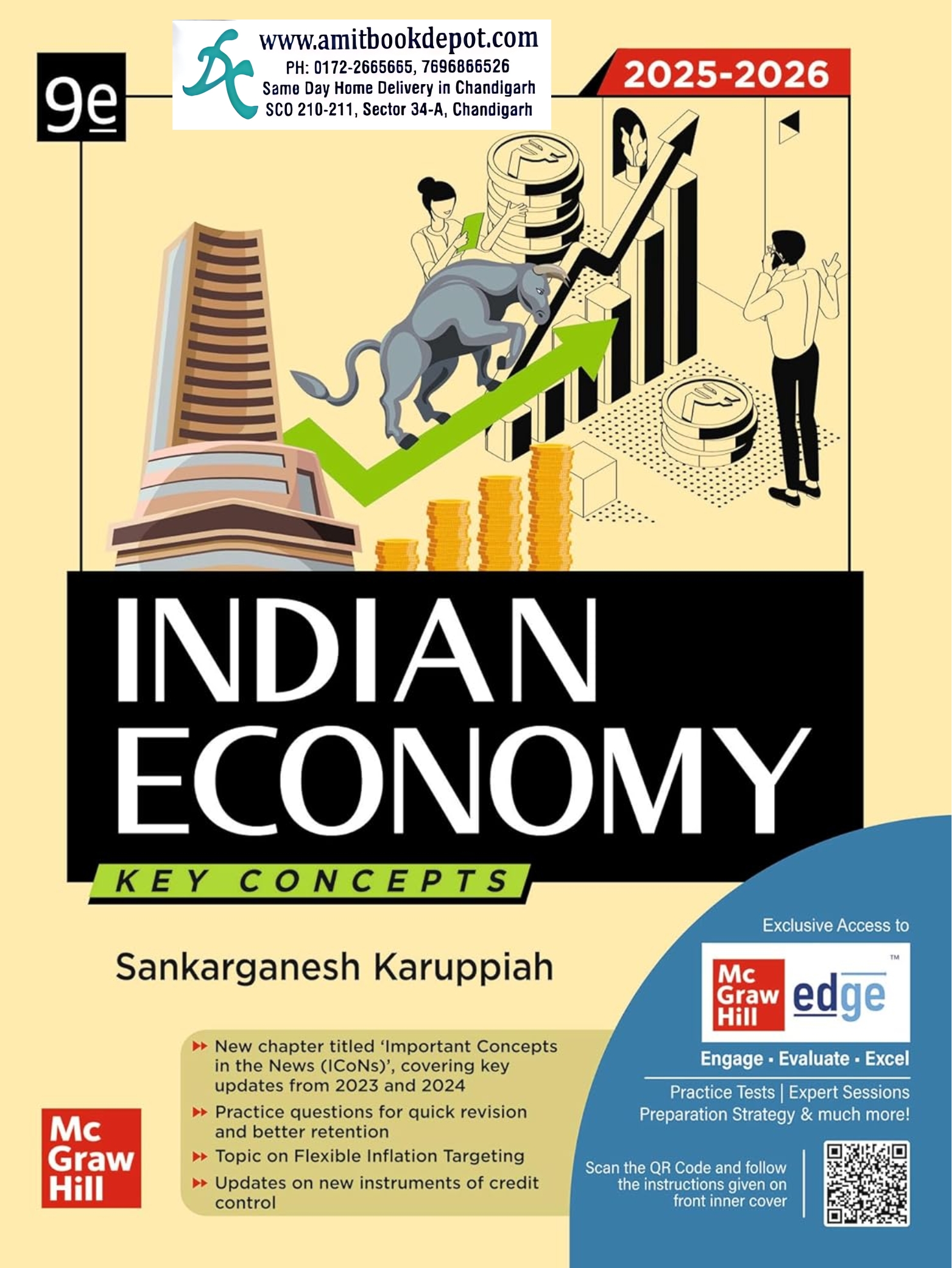





This book is tailored specifically to Indian economic topics relevant to exams like UPSC, State PSCs, SSC, and UGC-NET, with exam-oriented content, updated data, and clear explanations to facilitate effective preparation.
Yes, the 9th Edition incorporates the latest economic surveys, Union budgets, and current policy developments, ensuring readers access the most recent information.
It provides detailed, structured chapters with diagrams, tables, and simplified explanations on financial intermediaries, instruments, and regulatory bodies, making complex topics accessible.
Yes, each chapter includes learning objectives, key terms, summaries, and important data, designed for quick revision and reinforcement.
The book starts with foundational concepts in introductory economics, making it suitable for beginners, while also offering in-depth analysis for advanced learners and researchers.
Absolutely. It presents data, diagrams, and tables that relate economic theories to India’s current economic scenario, enhancing practical understanding.
Yes, chapters on the Money and Capital Markets detail the roles of RBI, SEBI, and other regulatory bodies, along with their policies and instruments.
While not explicitly mentioned, the structured chapters with key points and summaries are designed to facilitate self-assessment and practice for exams.
The content is systematically organized with clear headings, subheadings, bullet points, diagrams, and summaries to enhance clarity and retention.
Students preparing for competitive exams, researchers, policymakers, and anyone seeking an in-depth, analytical understanding of India’s economy will find this book highly beneficial.
No Description Added
This book is tailored specifically to Indian economic topics relevant to exams like UPSC, State PSCs, SSC, and UGC-NET, with exam-oriented content, updated data, and clear explanations to facilitate effective preparation.
Yes, the 9th Edition incorporates the latest economic surveys, Union budgets, and current policy developments, ensuring readers access the most recent information.
It provides detailed, structured chapters with diagrams, tables, and simplified explanations on financial intermediaries, instruments, and regulatory bodies, making complex topics accessible.
Yes, each chapter includes learning objectives, key terms, summaries, and important data, designed for quick revision and reinforcement.
The book starts with foundational concepts in introductory economics, making it suitable for beginners, while also offering in-depth analysis for advanced learners and researchers.
Absolutely. It presents data, diagrams, and tables that relate economic theories to India’s current economic scenario, enhancing practical understanding.
Yes, chapters on the Money and Capital Markets detail the roles of RBI, SEBI, and other regulatory bodies, along with their policies and instruments.
While not explicitly mentioned, the structured chapters with key points and summaries are designed to facilitate self-assessment and practice for exams.
The content is systematically organized with clear headings, subheadings, bullet points, diagrams, and summaries to enhance clarity and retention.
Students preparing for competitive exams, researchers, policymakers, and anyone seeking an in-depth, analytical understanding of India’s economy will find this book highly beneficial.