-
Mon-Fri: 10AM to 8PM 01722665665
-
My Account
-
-
0
Total :
₹ 0.00

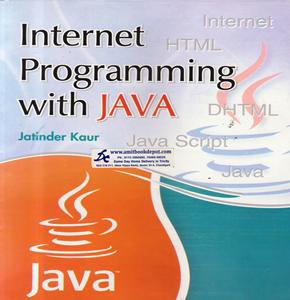
Internet Programming with Java For BCA 5th Sem ,BSC 1st Sem PU Chandigarh with Java by Jatinder Kaur is a comprehensive academic guide for mastering web development and Java programming. This book systematically covers Internet fundamentals, HTML, DHTML, JavaScript, and core Java programming concepts. Ideal for undergraduate students and beginners, it provides a structured learning path from basic web page creation using HTML tags, forms, and frames to advanced Java applets, AWT, and event handling. With clear explanations and a logical progression through topics like object-oriented programming, multithreading, and exception handling, this book is an essential resource for building a strong foundation in internet-based application development.


As a foundational textbook, it covers the core Java concepts that are consistent across versions. However, for specifics on the latest Java features, you may need to supplement it with updated resources, as the book focuses on establishing fundamental proficiency.
No, the book is structured to be beginner-friendly. It starts with internet basics and HTML before gradually introducing programming concepts with JavaScript and then moving to the more complex Java language.
The book comprehensively covers front-end technologies (HTML, DHTML, JavaScript, Java Applets) and core Java, which is used for back-end development. However, it does not delve into advanced server-side Java frameworks like JSP, Servlets, or Spring, focusing instead on the foundational language and client-side applets.
The DHTML (Dynamic HTML) chapter typically implies the use of CSS for styling and dynamic effects. While the focus is on the combination of technologies, for in-depth, dedicated CSS coverage, a supplementary resource might be beneficial.
A significant portion of the book (Part E, which includes 17 chapters) is dedicated exclusively to Java programming, making it the most extensive section and the core focus of the textbook.
The book covers the fundamental concepts of JavaScript and the DOM. Given its academic focus, it may not specifically highlight modern ES6+ features like arrow functions or classes, concentrating instead on the core language principles.
While Swing and JavaFX are more modern, learning AWT provides a crucial understanding of the underlying event handling model and basic GUI concepts in Java, which are transferable to other GUI toolkits.
You would need to check with the publisher, ABS Publications, or the instructor's resources for this book to see if a solution manual is available, as it is not typically included with the student edition.
Absolutely. Its structured, chapter-by-chapter approach makes it suitable for motivated individuals pursuing self-study in web and Java programming.
This book follows a traditional, academic textbook style with a formal structure and systematic presentation of topics, unlike more informal, project-based "head-first" guides.
As a foundational textbook, it covers the core Java concepts that are consistent across versions. However, for specifics on the latest Java features, you may need to supplement it with updated resources, as the book focuses on establishing fundamental proficiency.
No, the book is structured to be beginner-friendly. It starts with internet basics and HTML before gradually introducing programming concepts with JavaScript and then moving to the more complex Java language.
The book comprehensively covers front-end technologies (HTML, DHTML, JavaScript, Java Applets) and core Java, which is used for back-end development. However, it does not delve into advanced server-side Java frameworks like JSP, Servlets, or Spring, focusing instead on the foundational language and client-side applets.
The DHTML (Dynamic HTML) chapter typically implies the use of CSS for styling and dynamic effects. While the focus is on the combination of technologies, for in-depth, dedicated CSS coverage, a supplementary resource might be beneficial.
A significant portion of the book (Part E, which includes 17 chapters) is dedicated exclusively to Java programming, making it the most extensive section and the core focus of the textbook.
The book covers the fundamental concepts of JavaScript and the DOM. Given its academic focus, it may not specifically highlight modern ES6+ features like arrow functions or classes, concentrating instead on the core language principles.
While Swing and JavaFX are more modern, learning AWT provides a crucial understanding of the underlying event handling model and basic GUI concepts in Java, which are transferable to other GUI toolkits.
You would need to check with the publisher, ABS Publications, or the instructor's resources for this book to see if a solution manual is available, as it is not typically included with the student edition.
Absolutely. Its structured, chapter-by-chapter approach makes it suitable for motivated individuals pursuing self-study in web and Java programming.
This book follows a traditional, academic textbook style with a formal structure and systematic presentation of topics, unlike more informal, project-based "head-first" guides.