-
Mon-Fri: 10AM to 8PM 01722665665
-
My Account
-
-
0
Total :
₹ 0.00

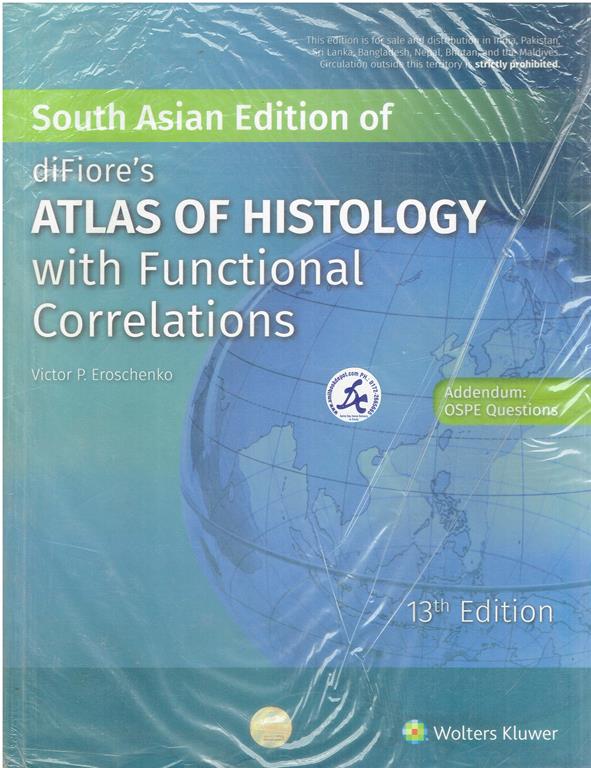
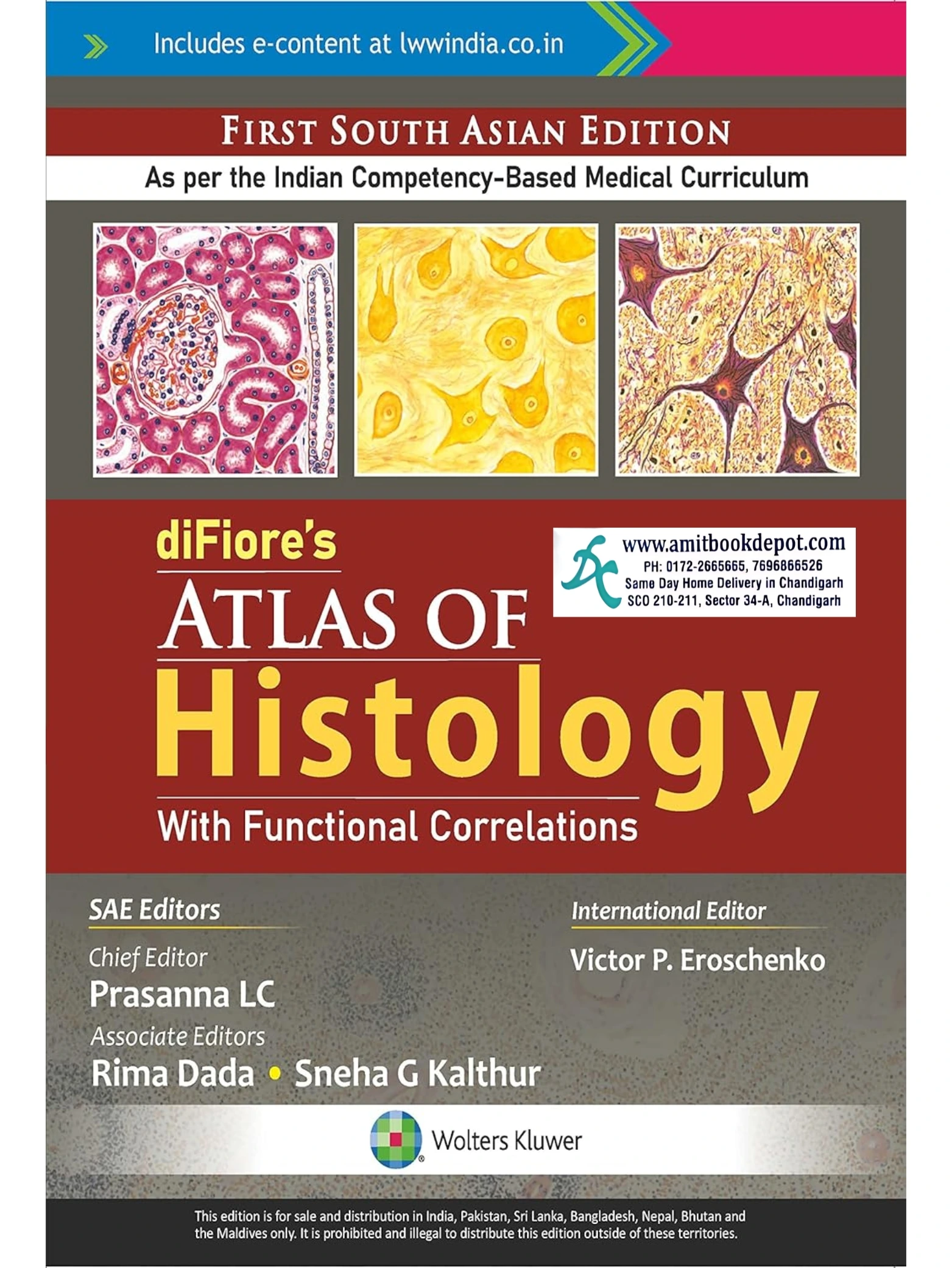





The atlas begins with Histologic Methods, covering tissue preparation, staining of sections, and effective histologic slide interpretation techniques.
It dedicates specific chapters to Epithelial, Connective, Muscle, and Nervous tissues, detailing their unique classifications and functional roles.
Hematopoietic Tissue is covered in Chapter 6, with dedicated sections on the components of Blood and the structure of Bone Marrow.
Skeletal Tissue is covered in Chapter 7, with separate, detailed sections for the structure and function of Cartilage and Bone.
Yes, Muscle Tissue is detailed in Chapter 8, featuring dedicated sections distinguishing Skeletal, Cardiac, and Smooth muscle morphology.
No, it spans four chapters, from the Oral Cavity and Salivary Glands to the Accessory Organs like the Liver and Pancreas.
It covers the Ovary, Uterus, Cervix, Vagina, Placenta, Mammary Glands, and Umbilical Cord across two comprehensive sections.
Yes, Chapter 22 is dedicated to the Organs of Special Senses, covering both the Visual System (eye) and Auditory System (ear).
Yes, the book features a dedicated Self-Assessment section designed to help students evaluate their understanding of the material.
The atlas extensively uses both Light and Transmission Electron Microscopy to illustrate cells, organelles, and the cell cycle.
No Description Added
The atlas begins with Histologic Methods, covering tissue preparation, staining of sections, and effective histologic slide interpretation techniques.
It dedicates specific chapters to Epithelial, Connective, Muscle, and Nervous tissues, detailing their unique classifications and functional roles.
Hematopoietic Tissue is covered in Chapter 6, with dedicated sections on the components of Blood and the structure of Bone Marrow.
Skeletal Tissue is covered in Chapter 7, with separate, detailed sections for the structure and function of Cartilage and Bone.
Yes, Muscle Tissue is detailed in Chapter 8, featuring dedicated sections distinguishing Skeletal, Cardiac, and Smooth muscle morphology.
No, it spans four chapters, from the Oral Cavity and Salivary Glands to the Accessory Organs like the Liver and Pancreas.
It covers the Ovary, Uterus, Cervix, Vagina, Placenta, Mammary Glands, and Umbilical Cord across two comprehensive sections.
Yes, Chapter 22 is dedicated to the Organs of Special Senses, covering both the Visual System (eye) and Auditory System (ear).
Yes, the book features a dedicated Self-Assessment section designed to help students evaluate their understanding of the material.
The atlas extensively uses both Light and Transmission Electron Microscopy to illustrate cells, organelles, and the cell cycle.