-
Mon-Fri: 10AM to 8PM 01722665665
-
My Account
-
-
0
Total :
₹ 0.00

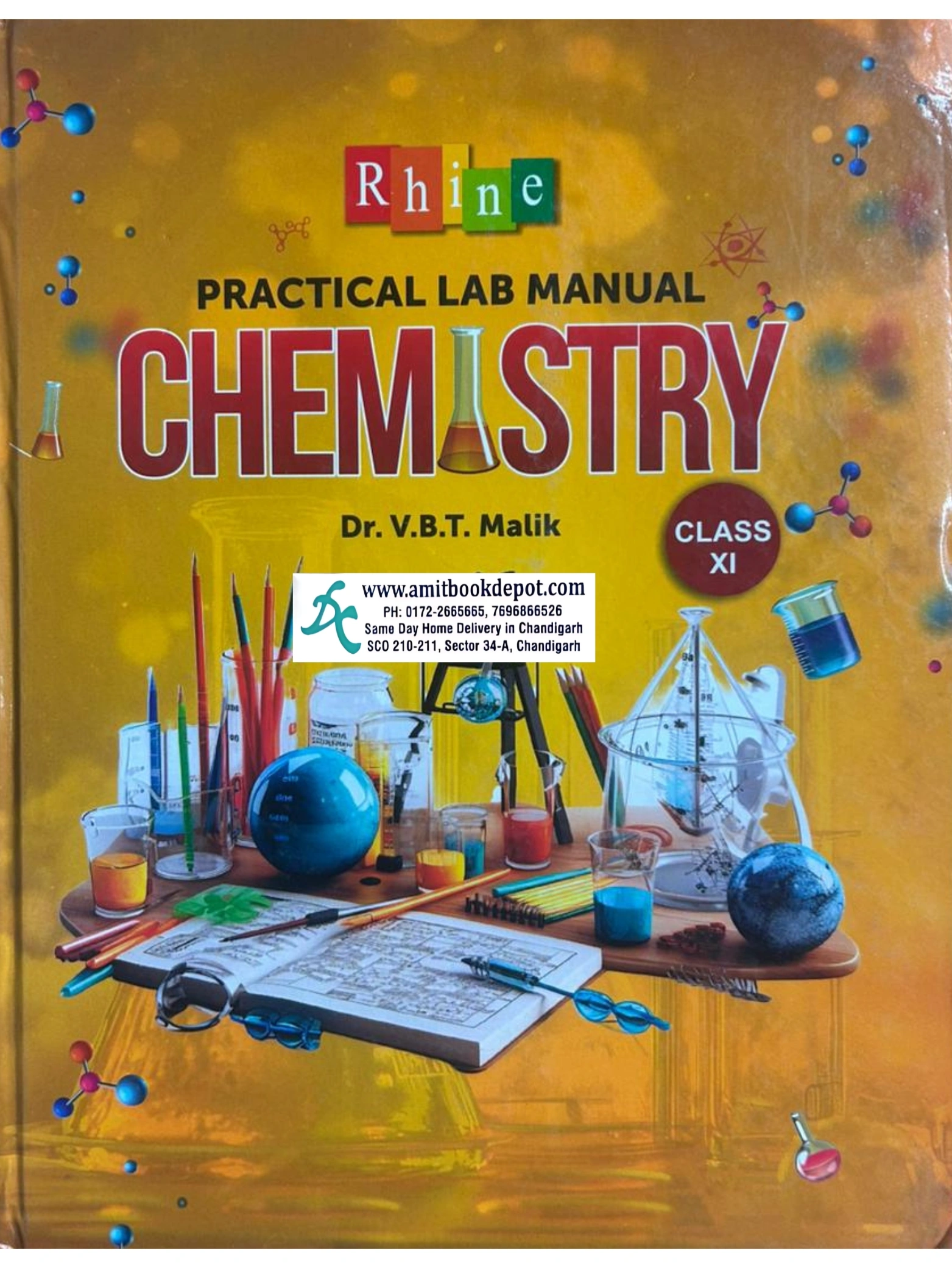




Yes, the book is meticulously updated to align with the latest CBSE Class 11 Chemistry Practical syllabus and examination pattern.
Absolutely. The section on qualitative analysis provides systematic flow charts and clear instructions for the identification of anions and cations, simplifying the process for students.
Yes, it offers a standardized format for recording aim, apparatus, procedure, observations, calculations, and results, which helps in creating a neat and exam-ready practical file.
It lists several suggested projects (like water testing, soap foaming capacity) that are designed to be feasible within school laboratory constraints and encourage application-based learning.
Yes, the included tables are comprehensive and specifically tailored for the calculations required in quantitative estimation and other chemistry practicals.
The book follows the syllabus guidelines and primarily details the standard-scale experiments. It advises using microchemical methods where possible and facilities permit.
Yes, the book contains clear, well-labeled diagrams that assist students in correctly assembling apparatus for experiments like titration, crystallization, and determination of melting point.
Yes, the Quantitative Estimation unit includes instructions on the correct use of balances for preparing standard solutions, a crucial foundational skill.
Yes, the qualitative analysis section includes a detailed explanation of the sodium fusion test (Lassaigne's test) for the detection of these elements in organic compounds.
The investigatory project section provides a framework and methodology. Students can use the outlined experimental approach to collect and analyze samples from different sources as part of their project work.
No Description Added
Yes, the book is meticulously updated to align with the latest CBSE Class 11 Chemistry Practical syllabus and examination pattern.
Absolutely. The section on qualitative analysis provides systematic flow charts and clear instructions for the identification of anions and cations, simplifying the process for students.
Yes, it offers a standardized format for recording aim, apparatus, procedure, observations, calculations, and results, which helps in creating a neat and exam-ready practical file.
It lists several suggested projects (like water testing, soap foaming capacity) that are designed to be feasible within school laboratory constraints and encourage application-based learning.
Yes, the included tables are comprehensive and specifically tailored for the calculations required in quantitative estimation and other chemistry practicals.
The book follows the syllabus guidelines and primarily details the standard-scale experiments. It advises using microchemical methods where possible and facilities permit.
Yes, the book contains clear, well-labeled diagrams that assist students in correctly assembling apparatus for experiments like titration, crystallization, and determination of melting point.
Yes, the Quantitative Estimation unit includes instructions on the correct use of balances for preparing standard solutions, a crucial foundational skill.
Yes, the qualitative analysis section includes a detailed explanation of the sodium fusion test (Lassaigne's test) for the detection of these elements in organic compounds.
The investigatory project section provides a framework and methodology. Students can use the outlined experimental approach to collect and analyze samples from different sources as part of their project work.