-
Mon-Fri: 10AM to 8PM 01722665665
-
My Account
-
-
0
Total :
₹ 0.00

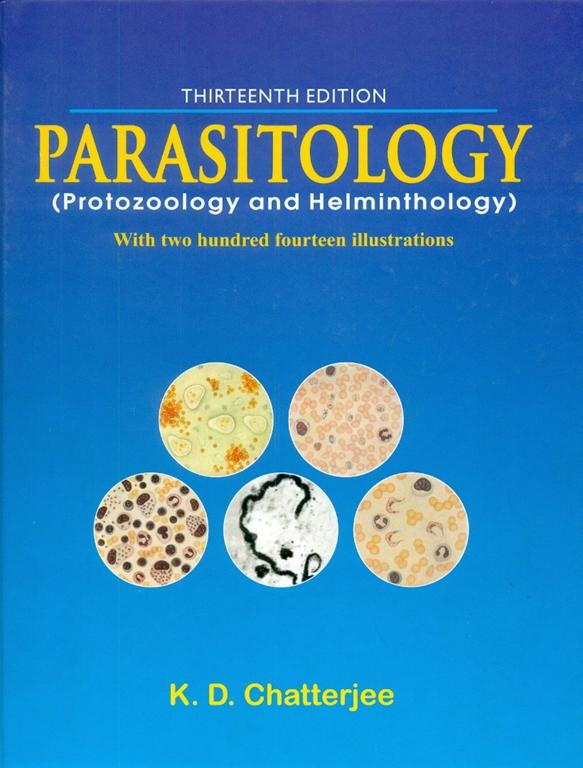
The 13th edition of Parasitology, Protozoology and Helminthology by K.D. Chatterjee is the gold-standard book for medical students and professionals. Published by CBS Publishers, this edition features 214 detailed illustrations that simplify complex life cycles and morphologies. The book provides exhaustive coverage of medical parasites, structured into dedicated sections on protozoology and helminthology. It includes vital appendices on diagnostic procedures—such as stool and blood examination—and the treatment of parasitic infections with drug dosages, making it an essential resource for both academic success and clinical practice.



It covers Phyla Sarcomastigophora, Apicomplexa, Ciliophora, and Microspora, detailing the morphology and life cycles of protozoan parasites.
Phylum Platyhelminthes is covered through Class Cestoidea (tapeworms) and Class Trematoda (flukes) in the Helminthology section.
The book contains 214 detailed illustrations, including life cycle diagrams and morphological drawings to aid visual learning.
The appendix details macroscopic and microscopic examination, concentration techniques, and special stains for detecting intestinal parasites.
Yes, Appendix I covers the examination of blood, including techniques for preparing thick and thin smears for malaria and filaria.
Yes, Appendix II provides a comprehensive list of drugs with their dosages and methods of administration for various parasitic infections.
Entamoeba histolytica, the causative agent of amoebic dysentery, is a key protozoan covered in this section.
Yes, the diagnostic procedures appendix includes methods for cultural examination to aid in the isolation and identification of parasites.
Yes, Appendix I details the processing and examination of biopsy material for diagnosing tissue-dwelling parasites.
Wuchereria bancrofti is the primary nematode covered for its role in causing lymphatic filariasis.
It covers Phyla Sarcomastigophora, Apicomplexa, Ciliophora, and Microspora, detailing the morphology and life cycles of protozoan parasites.
Phylum Platyhelminthes is covered through Class Cestoidea (tapeworms) and Class Trematoda (flukes) in the Helminthology section.
The book contains 214 detailed illustrations, including life cycle diagrams and morphological drawings to aid visual learning.
The appendix details macroscopic and microscopic examination, concentration techniques, and special stains for detecting intestinal parasites.
Yes, Appendix I covers the examination of blood, including techniques for preparing thick and thin smears for malaria and filaria.
Yes, Appendix II provides a comprehensive list of drugs with their dosages and methods of administration for various parasitic infections.
Entamoeba histolytica, the causative agent of amoebic dysentery, is a key protozoan covered in this section.
Yes, the diagnostic procedures appendix includes methods for cultural examination to aid in the isolation and identification of parasites.
Yes, Appendix I details the processing and examination of biopsy material for diagnosing tissue-dwelling parasites.
Wuchereria bancrofti is the primary nematode covered for its role in causing lymphatic filariasis.