-
Mon-Fri: 10AM to 8PM 01722665665
-
My Account
-
-
0
Total :
₹ 0.00

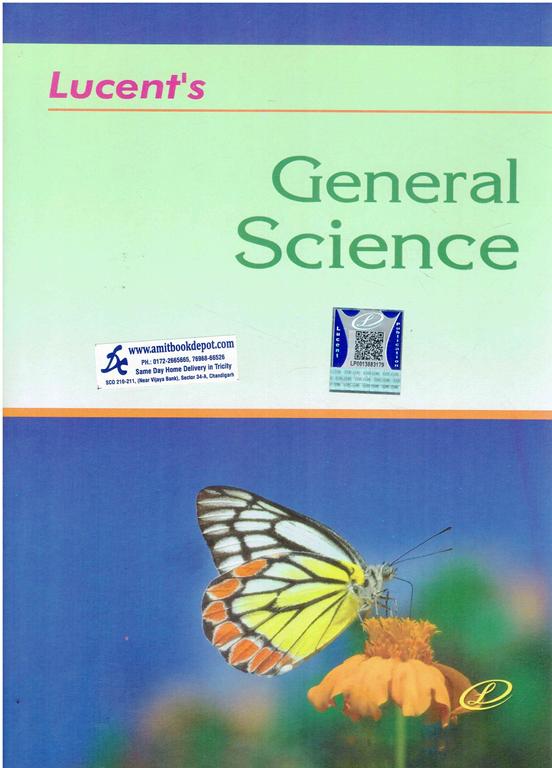
Yes, this book is widely considered the standard text for covering the theory portion of the UPSC Prelims general science syllabus. Its content is based on a thorough analysis of UPSC and other competitive exam trends, making it a perfect foundation
Absolutely. The book is written in a very lucid, simple language and uses a point-wise format to explain complex topics from basic principles, making it ideal for students from non-science backgrounds
Yes, as per the detailed syllabus provided, the book includes a dedicated section on "Science and Technology" to cover modern advancements and their applications, which is crucial for exams like UPSC and State PCS [citation:Provided Syllabus].
Yes, the Physics section, and likely other sections, includes a glossary. This helps students quickly revise important definitions and terminology [citation:Provided Syllabus].
It is highly useful for a wide range of exams including: IAS (Pre), PCS (Pre), SSC (CGL/CHSL/Matric), Railway (RRB NTPC, Group D), CDS, NDA, SCRA, NTSE, CPO-SI, and CSIR/UGC NET, among others .
While the provided syllabus lists "Biology" as a main section, the book typically covers all major branches including botany, zoology, and human physiology in a concise and exam-oriented manner.
The Physics section covers an exhaustive range of topics, including Mechanics, Heat, Light, Sound, Electricity & Magnetism, Modern Physics, Electronics, and The Universe, complete with sub-sections and appendices [citation:Provided Syllabus].
Yes, the book is supplemented with several illustrations, tables, and figures to make learning easier and to help visualize scientific concepts and instruments .
While it is primarily designed for generalist competitive exams (like civil services and banking), it provides a very strong foundation in the basics of Physical, Inorganic, and Organic Chemistry. It is excellent for building concepts but may need to be supplemented with more advanced books for dedicated engineering entrances like JEE.
The number of pages can vary slightly by edition, but it generally ranges from approximately 400 to 450 pages, covering all subjects in a compact and comprehensive manner .
No Description Added
Yes, this book is widely considered the standard text for covering the theory portion of the UPSC Prelims general science syllabus. Its content is based on a thorough analysis of UPSC and other competitive exam trends, making it a perfect foundation
Absolutely. The book is written in a very lucid, simple language and uses a point-wise format to explain complex topics from basic principles, making it ideal for students from non-science backgrounds
Yes, as per the detailed syllabus provided, the book includes a dedicated section on "Science and Technology" to cover modern advancements and their applications, which is crucial for exams like UPSC and State PCS [citation:Provided Syllabus].
Yes, the Physics section, and likely other sections, includes a glossary. This helps students quickly revise important definitions and terminology [citation:Provided Syllabus].
It is highly useful for a wide range of exams including: IAS (Pre), PCS (Pre), SSC (CGL/CHSL/Matric), Railway (RRB NTPC, Group D), CDS, NDA, SCRA, NTSE, CPO-SI, and CSIR/UGC NET, among others .
While the provided syllabus lists "Biology" as a main section, the book typically covers all major branches including botany, zoology, and human physiology in a concise and exam-oriented manner.
The Physics section covers an exhaustive range of topics, including Mechanics, Heat, Light, Sound, Electricity & Magnetism, Modern Physics, Electronics, and The Universe, complete with sub-sections and appendices [citation:Provided Syllabus].
Yes, the book is supplemented with several illustrations, tables, and figures to make learning easier and to help visualize scientific concepts and instruments .
While it is primarily designed for generalist competitive exams (like civil services and banking), it provides a very strong foundation in the basics of Physical, Inorganic, and Organic Chemistry. It is excellent for building concepts but may need to be supplemented with more advanced books for dedicated engineering entrances like JEE.
The number of pages can vary slightly by edition, but it generally ranges from approximately 400 to 450 pages, covering all subjects in a compact and comprehensive manner .