-
Mon-Fri: 10AM to 8PM 01722665665
-
My Account
-
-
0
Total :
₹ 0.00

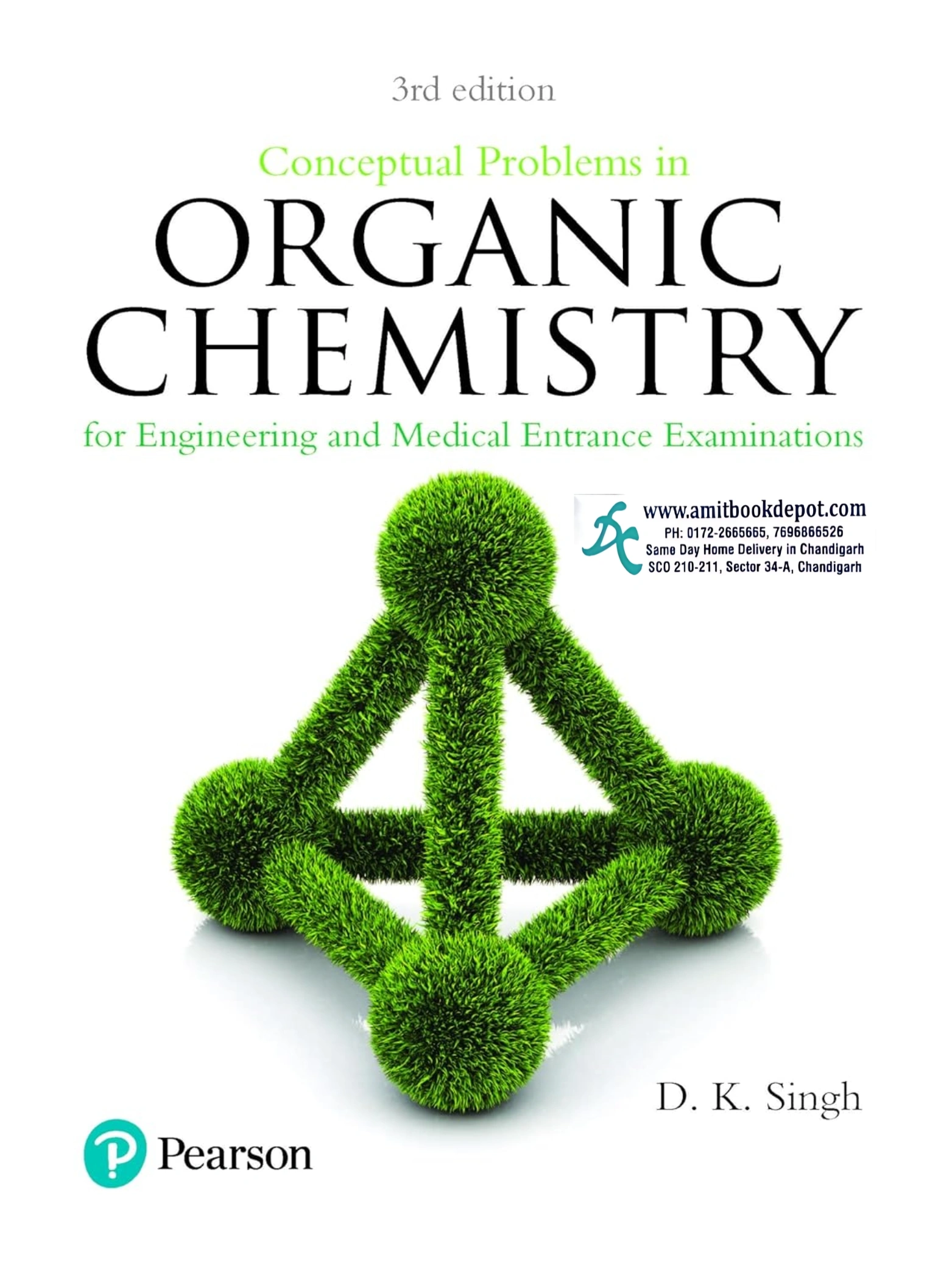
Conceptual Problems in Organic Chemistry by D.K. Singh (Pearson Education) is the definitive guide for JEE Main, JEE Advanced, and NEET-UG aspirants. This Third Edition strengthens problem-solving skills through curated conceptual problems that cover the entire organic chemistry syllabus. It emphasizes deep understanding of reaction mechanisms, isomerism, reactive intermediates, and core principles over rote learning. Ideal for engineering and medical entrance examinations, its chapter-wise structure allows targeted practice. Master this book to build a strong foundation, clarify concepts, and gain the analytical edge needed to excel in high-stakes competitive exams.

This book focuses exclusively on conceptual problems designed to test and deepen understanding of fundamental principles, unlike textbooks which explain theory or MCQ banks which may emphasize rote application.
The book is best suited for students who have completed the basic theory. It is ideal for Class 12 students and those in revision phases, as it applies foundational concepts to complex problems.
Yes, the Third Edition is updated to reflect the current syllabi and evolving patterns of JEE and NEET examinations.
Absolutely. The book includes a dedicated chapter on Bio-Molecules, ensuring complete coverage for medical entrance aspirants.
It strengthens analytical thinking by presenting non-standard, concept-driven problems that mimic the puzzle-like nature of JEE Advanced questions, training you to handle surprises.
No, it is a complementary resource. It should be used alongside a standard textbook for theory and classroom notes for applying and testing that knowledge.
Yes, Chapters 3 and 4 (Substituent Effects, Reactive Intermediates... & Reaction Mechanism) provide an in-depth conceptual foundation critical for deciphering complex mechanisms.
Yes, the strong conceptual grounding it provides is beneficial for any competitive examination that includes a challenging organic chemistry component.
These are key parts of the Isomerism chapter, featuring problems that test spatial understanding and stability concepts beyond just identifying types of isomers.
The book focuses on conceptual problems rather than being a past papers compilation. However, the problems are crafted to be perfectly analogous to the style and level of questions asked in these exams.
This book focuses exclusively on conceptual problems designed to test and deepen understanding of fundamental principles, unlike textbooks which explain theory or MCQ banks which may emphasize rote application.
The book is best suited for students who have completed the basic theory. It is ideal for Class 12 students and those in revision phases, as it applies foundational concepts to complex problems.
Yes, the Third Edition is updated to reflect the current syllabi and evolving patterns of JEE and NEET examinations.
Absolutely. The book includes a dedicated chapter on Bio-Molecules, ensuring complete coverage for medical entrance aspirants.
It strengthens analytical thinking by presenting non-standard, concept-driven problems that mimic the puzzle-like nature of JEE Advanced questions, training you to handle surprises.
No, it is a complementary resource. It should be used alongside a standard textbook for theory and classroom notes for applying and testing that knowledge.
Yes, Chapters 3 and 4 (Substituent Effects, Reactive Intermediates... & Reaction Mechanism) provide an in-depth conceptual foundation critical for deciphering complex mechanisms.
Yes, the strong conceptual grounding it provides is beneficial for any competitive examination that includes a challenging organic chemistry component.
These are key parts of the Isomerism chapter, featuring problems that test spatial understanding and stability concepts beyond just identifying types of isomers.
The book focuses on conceptual problems rather than being a past papers compilation. However, the problems are crafted to be perfectly analogous to the style and level of questions asked in these exams.