-
Mon-Fri: 10AM to 8PM 01722665665
-
My Account
-
-
0
Total :
₹ 0.00

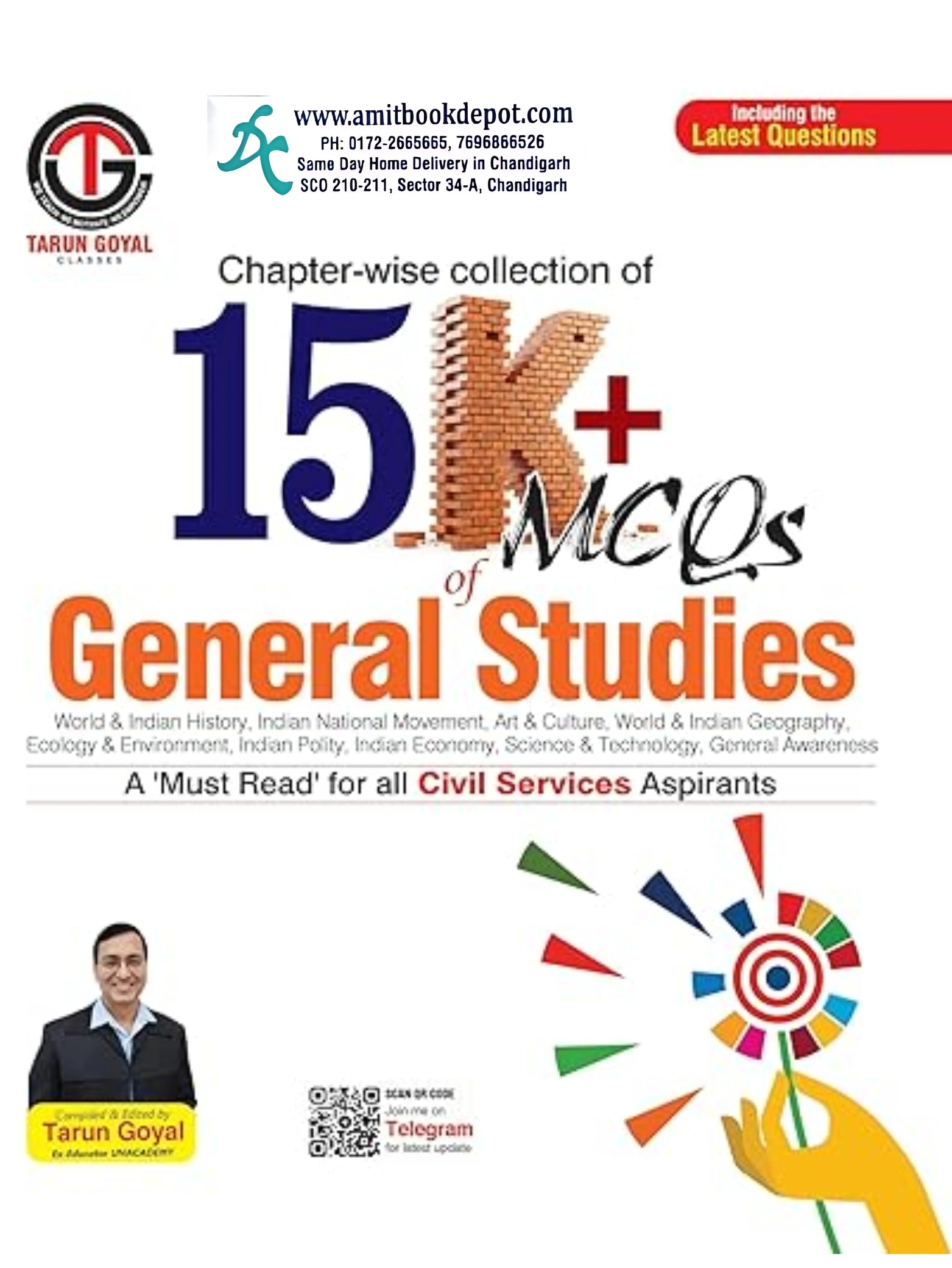
Absolutely. The book covers the entire static GS syllabus for UPSC Prelims. However, for the most current events, aspirants should supplement it with daily newspaper reading and monthly current affairs magazines, as the dynamic part is updated till the book's print date.
Yes, the General Awareness section includes chapters on Government Initiatives/Plans, International Forums, Awards, Sports, and more, with content updated up to the book's publication year. It provides a strong static base and recent updates, but for news from the last 3-6 months before your exam, external current sources are recommended.
Yes, the Indian Polity section is structured around the Constitution and includes relevant amendments. For the very latest amendments passed after the book's publication date, candidates should cross-check with official government portals or recent news.
Yes, it can serve as a comprehensive primary resource. The vast number of questions across all SSC CGL General Studies & Intelligence modules makes it highly effective. For tier-specific or extremely advanced practice, some candidates may use supplementary subject-focused books.
The book contains numerous questions on locations, rivers, ports, and projects that test map-based knowledge. While it may not contain full-color maps itself, it prepares you for such questions verbally. Using a school atlas alongside is highly recommended for visual learning.
Extremely useful. Many State PSC exams (like UPPSC, BPSC) frequently include Assertion-Reason type questions in their General Studies papers. The dedicated practice in this book for each subject is a unique and valuable feature for such exams.
Yes, it comprehensively covers Physics, Chemistry, and Biology fundamentals aligned with the NCERT science syllabus up to class 10, which forms the core for most competitive exams, along with additional applied science and technology topics.
Yes, the History section is meticulously divided into 20 sub-chapters, providing proportional coverage to all eras—Indus Valley, Vedic Age, Medieval Kingdoms, Mughals, British Rule, Indian National Movement—and includes a dedicated chapter on Art & Culture as per exam patterns.
The book incorporates a vast collection of MCQs that are inspired by and reflective of the patterns of previous years' questions across various exams. However, it may not be exclusively or explicitly labeled as a "PYQ" compilation.
Yes, the General Studies syllabus for CDS, CAPF, and similar defense service exams overlaps significantly with the content of this book, especially in History, Geography, Polity, Economy, and General Science. It serves as excellent foundational practice for these exams as well.
No Description Added
Absolutely. The book covers the entire static GS syllabus for UPSC Prelims. However, for the most current events, aspirants should supplement it with daily newspaper reading and monthly current affairs magazines, as the dynamic part is updated till the book's print date.
Yes, the General Awareness section includes chapters on Government Initiatives/Plans, International Forums, Awards, Sports, and more, with content updated up to the book's publication year. It provides a strong static base and recent updates, but for news from the last 3-6 months before your exam, external current sources are recommended.
Yes, the Indian Polity section is structured around the Constitution and includes relevant amendments. For the very latest amendments passed after the book's publication date, candidates should cross-check with official government portals or recent news.
Yes, it can serve as a comprehensive primary resource. The vast number of questions across all SSC CGL General Studies & Intelligence modules makes it highly effective. For tier-specific or extremely advanced practice, some candidates may use supplementary subject-focused books.
The book contains numerous questions on locations, rivers, ports, and projects that test map-based knowledge. While it may not contain full-color maps itself, it prepares you for such questions verbally. Using a school atlas alongside is highly recommended for visual learning.
Extremely useful. Many State PSC exams (like UPPSC, BPSC) frequently include Assertion-Reason type questions in their General Studies papers. The dedicated practice in this book for each subject is a unique and valuable feature for such exams.
Yes, it comprehensively covers Physics, Chemistry, and Biology fundamentals aligned with the NCERT science syllabus up to class 10, which forms the core for most competitive exams, along with additional applied science and technology topics.
Yes, the History section is meticulously divided into 20 sub-chapters, providing proportional coverage to all eras—Indus Valley, Vedic Age, Medieval Kingdoms, Mughals, British Rule, Indian National Movement—and includes a dedicated chapter on Art & Culture as per exam patterns.
The book incorporates a vast collection of MCQs that are inspired by and reflective of the patterns of previous years' questions across various exams. However, it may not be exclusively or explicitly labeled as a "PYQ" compilation.
Yes, the General Studies syllabus for CDS, CAPF, and similar defense service exams overlaps significantly with the content of this book, especially in History, Geography, Polity, Economy, and General Science. It serves as excellent foundational practice for these exams as well.