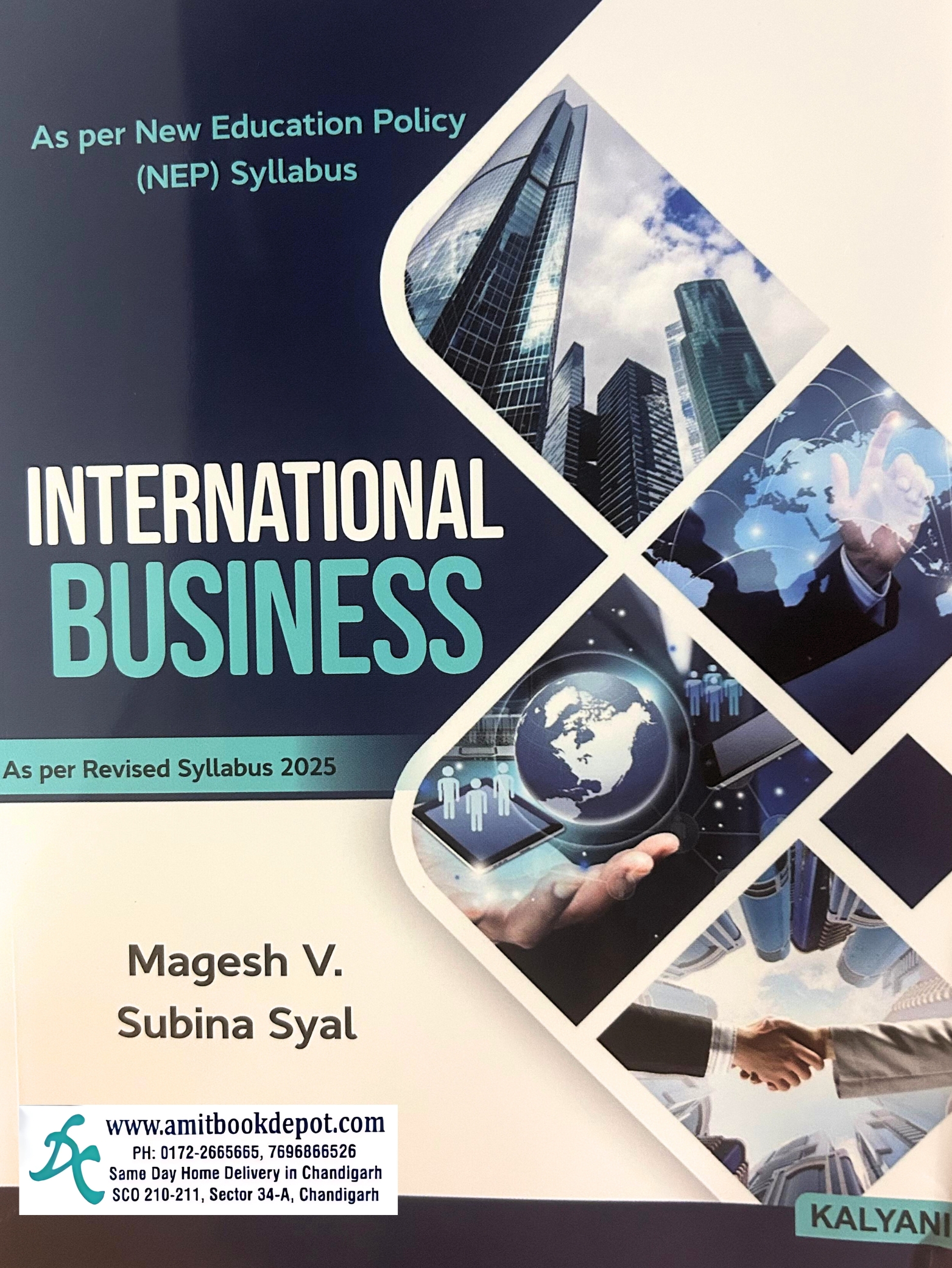
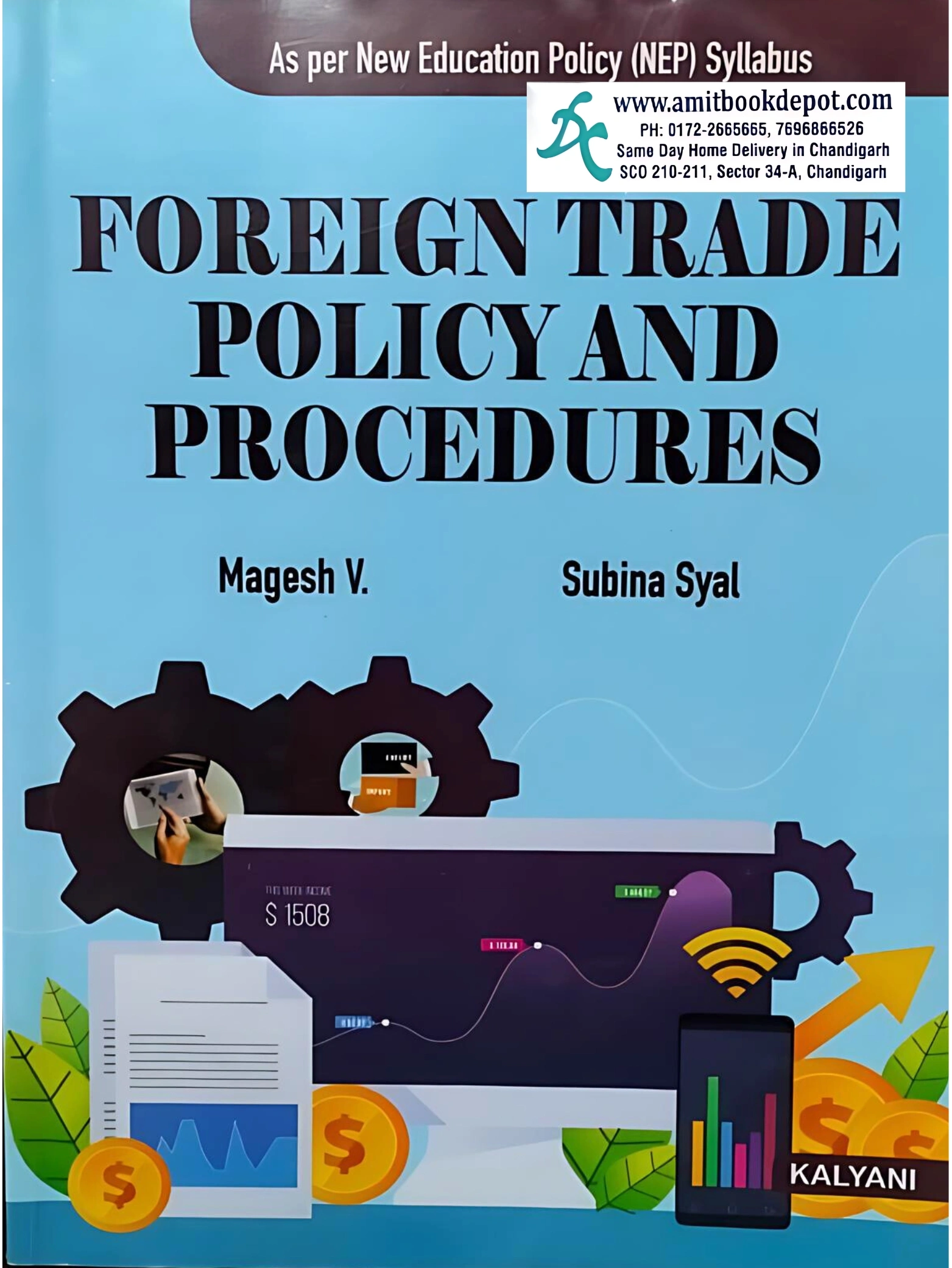
Yes, this book is meticulously crafted to align with the syllabus for the course "Foreign Trade Policy & Procedures," typically coded as COM/BBA (MDSC)-201A, including recent developments as per syllabus requirements.
Absolutely. Unit II contains a dedicated chapter that explains the role of EPZs and STPs in driving exports and innovation, which is a key learning objective (CO3) of the course.
Yes, Chapter 2 provides an in-depth analysis of India's Foreign Trade Policy, and its concepts are reinforced throughout Unit I, ensuring a comprehensive understanding.
Yes, the book includes dedicated chapters on both "Deemed Exports" (Chapter 5) and "Counter-Trade Arrangements in International Trade" (Chapter 12), which are essential parts of the syllabus.
Yes, Chapter 11 on "Foreign Collaborations & Foreign Direct Investments" covers the policy and framework for FDI, addressing a core course outcome (CO4).
Yes, the book's structure, with its clear division into Unit I and Unit II, directly corresponds to the exam sections (Sections B & C for essay-type questions), making it ideal for targeted preparation.
This book is designed for both BCOM and BBA 2nd-semester students where "Foreign Trade Policy & Procedures" is a part of their curriculum.
Yes, Unit II begins with chapters exploring the role of State Trading Houses and Export-Oriented Units (EOUs) from a global perspective.
Yes, the final chapter (Chapter 14) of the book is dedicated to "Abroad Projects and Consultancy Exports," completing the coverage of all syllabus topics for Unit II.
While its primary focus is the undergraduate syllabus, the foundational knowledge on FTP, FDI, and export promotion mechanisms can be a valuable starting point for competitive exam preparation.
No Description Added
Yes, this book is meticulously crafted to align with the syllabus for the course "Foreign Trade Policy & Procedures," typically coded as COM/BBA (MDSC)-201A, including recent developments as per syllabus requirements.
Absolutely. Unit II contains a dedicated chapter that explains the role of EPZs and STPs in driving exports and innovation, which is a key learning objective (CO3) of the course.
Yes, Chapter 2 provides an in-depth analysis of India's Foreign Trade Policy, and its concepts are reinforced throughout Unit I, ensuring a comprehensive understanding.
Yes, the book includes dedicated chapters on both "Deemed Exports" (Chapter 5) and "Counter-Trade Arrangements in International Trade" (Chapter 12), which are essential parts of the syllabus.
Yes, Chapter 11 on "Foreign Collaborations & Foreign Direct Investments" covers the policy and framework for FDI, addressing a core course outcome (CO4).
Yes, the book's structure, with its clear division into Unit I and Unit II, directly corresponds to the exam sections (Sections B & C for essay-type questions), making it ideal for targeted preparation.
This book is designed for both BCOM and BBA 2nd-semester students where "Foreign Trade Policy & Procedures" is a part of their curriculum.
Yes, Unit II begins with chapters exploring the role of State Trading Houses and Export-Oriented Units (EOUs) from a global perspective.
Yes, the final chapter (Chapter 14) of the book is dedicated to "Abroad Projects and Consultancy Exports," completing the coverage of all syllabus topics for Unit II.
While its primary focus is the undergraduate syllabus, the foundational knowledge on FTP, FDI, and export promotion mechanisms can be a valuable starting point for competitive exam preparation.