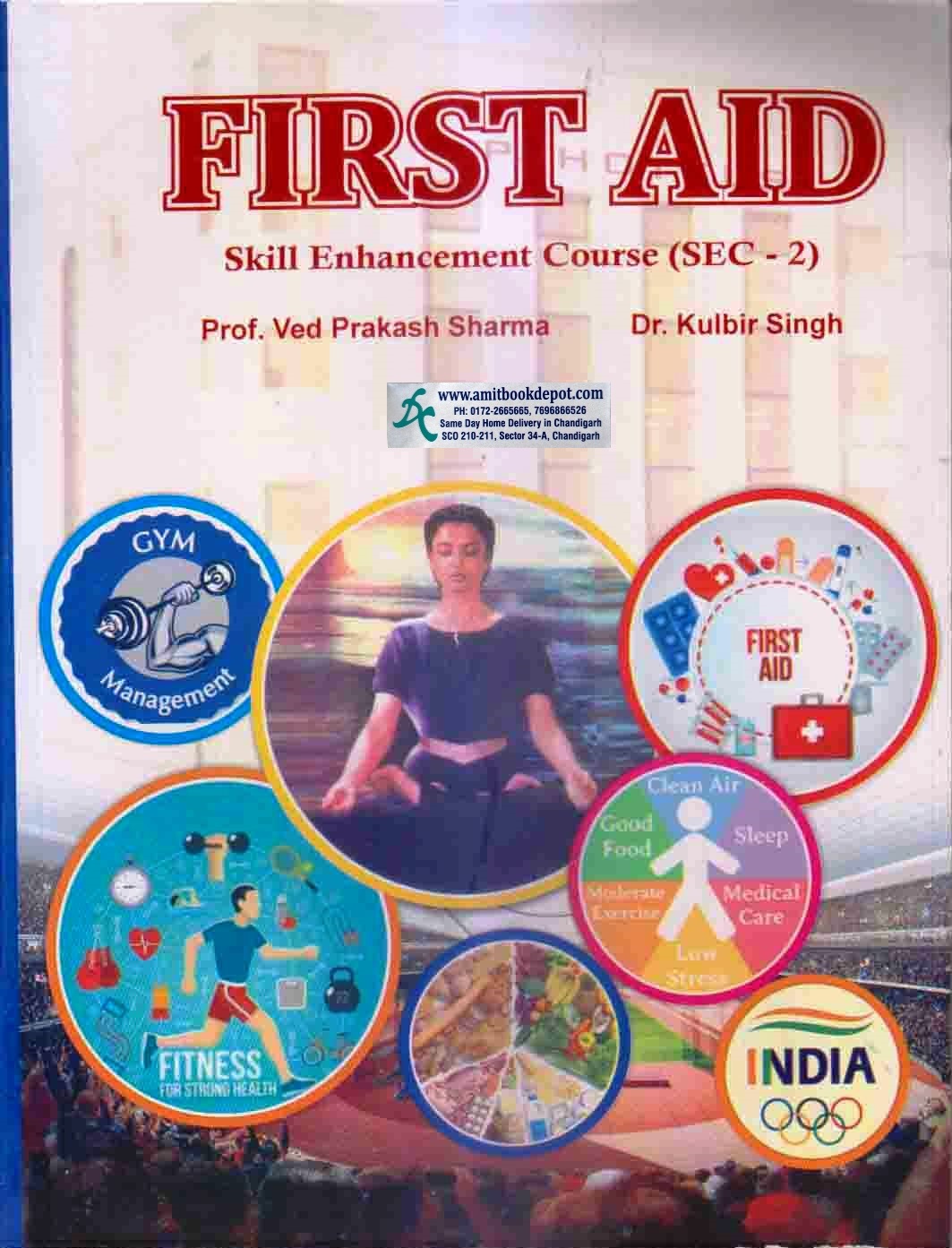
yes, this book is meticulously crafted to cover the entire prescribed syllabus for the First Aid (SEC-2) course for BA 2nd Semester at Panjab University, including both theory and practical components.
Yes, Unit III has a dedicated section that explains the emergency response and the crucial steps for performing CPR in a clear and easy-to-understand manner.
Unit II provides detailed information on the different types of burns and the specific first aid procedures required for each type.
Yes, Unit I details the essentials of a First Aid Kit, listing the necessary items one should have.
The practical knowledge and clear theoretical explanations directly support the activities and evaluations that form the basis of the internal assessment marks for both theory and practical.
While the provided content list does not explicitly mention illustrations, the detailed descriptions of the types and applications of dressings and bandages are designed to be clear. It is recommended to check the physical book for any supporting diagrams.
Yes, Unit III includes a specific chapter on first aid for heat illness, which is crucial for managing emergencies arising from high-temperature environments.
While it is tailored for PU students, the core first aid knowledge, including CPR, burn care, and injury management, is universally applicable and can be a valuable resource for any individual.
This is a primary survey method taught in the practical section to observe a victim's responsiveness and consciousness by looking for chest movement, listening for breath, and feeling for air, which is crucial before starting CPR.
Yes, Unit I covers first aid for both sprains and fractures, which would inherently include guidance on identifying and differentiating between these common injuries.
No Description Added
yes, this book is meticulously crafted to cover the entire prescribed syllabus for the First Aid (SEC-2) course for BA 2nd Semester at Panjab University, including both theory and practical components.
Yes, Unit III has a dedicated section that explains the emergency response and the crucial steps for performing CPR in a clear and easy-to-understand manner.
Unit II provides detailed information on the different types of burns and the specific first aid procedures required for each type.
Yes, Unit I details the essentials of a First Aid Kit, listing the necessary items one should have.
The practical knowledge and clear theoretical explanations directly support the activities and evaluations that form the basis of the internal assessment marks for both theory and practical.
While the provided content list does not explicitly mention illustrations, the detailed descriptions of the types and applications of dressings and bandages are designed to be clear. It is recommended to check the physical book for any supporting diagrams.
Yes, Unit III includes a specific chapter on first aid for heat illness, which is crucial for managing emergencies arising from high-temperature environments.
While it is tailored for PU students, the core first aid knowledge, including CPR, burn care, and injury management, is universally applicable and can be a valuable resource for any individual.
This is a primary survey method taught in the practical section to observe a victim's responsiveness and consciousness by looking for chest movement, listening for breath, and feeling for air, which is crucial before starting CPR.
Yes, Unit I covers first aid for both sprains and fractures, which would inherently include guidance on identifying and differentiating between these common injuries.