-
Mon-Fri: 10AM to 8PM 01722665665
-
My Account
-
-
0
Total :
₹ 0.00

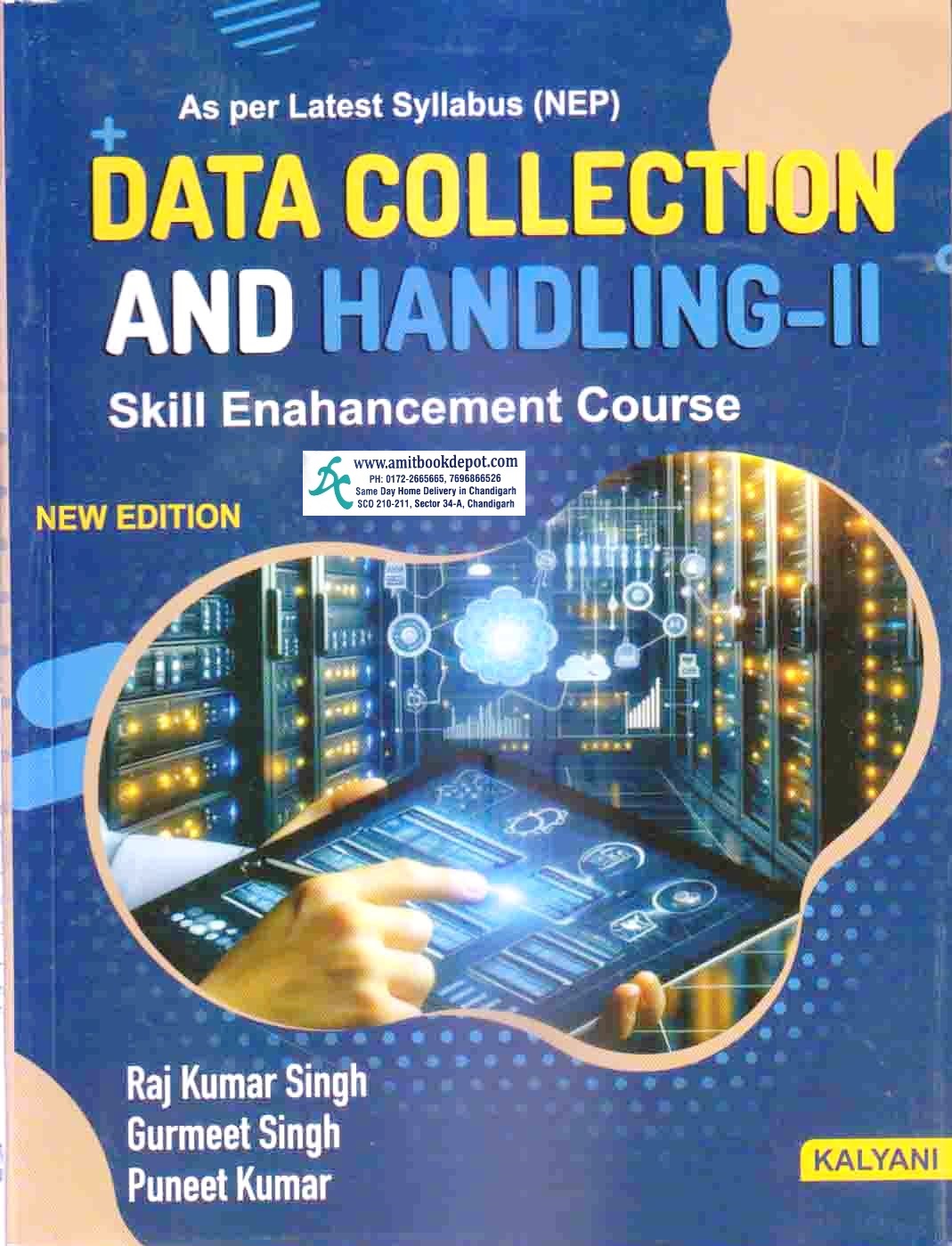

Yes, this book is meticulously crafted to align 100% with the prescribed syllabus for the Skill Enhancement Course ECO-SEC-165, ensuring complete coverage of all units and topics.
Yes, Chapter 7, "Statistics Using Excel," is dedicated to providing practical knowledge on performing statistical calculations and creating graphs using Microsoft Excel, as mandated by the syllabus.
Absolutely. Chapter 8, "Ethics for Data Collection and Handling," provides a dedicated discussion on ethical issues, stakeholders, standards of conduct, and data privacy, which is a crucial part of Unit-III.
Yes, the book is designed for BA students, many of whom may not have an advanced math background. Concepts are explained in a clear, step-by-step manner with a focus on application in social sciences.
While the book covers the entire theoretical foundation, the clarity of concepts and structured presentation will undoubtedly help a student perform well in all aspects of the course, including internal assessments.
Yes, the book details the entire data processing pipeline in Chapter 2, which includes specific sections on coding, classification, and data cleaning, making complex procedures easy to understand.
The book covers a wide range of graphical techniques as per the syllabus, including scattergrams, histograms, bar charts, pie charts, line graphs, and frequency polygons.
Yes, there are dedicated chapters (4 and 5) that provide a comprehensive explanation of measures of averages (mean, median, mode) and measures of dispersion.
By providing competency in executing surveys and handling data, the book directly prepares students for entry-level jobs in field investigation, market research, and data analysis roles in various sectors.
While the book focuses on content, its structure mirrors the syllabus units, making it easier for students to prepare for the specific exam pattern of 7 questions with internal choice from each unit.
No Description Added
Yes, this book is meticulously crafted to align 100% with the prescribed syllabus for the Skill Enhancement Course ECO-SEC-165, ensuring complete coverage of all units and topics.
Yes, Chapter 7, "Statistics Using Excel," is dedicated to providing practical knowledge on performing statistical calculations and creating graphs using Microsoft Excel, as mandated by the syllabus.
Absolutely. Chapter 8, "Ethics for Data Collection and Handling," provides a dedicated discussion on ethical issues, stakeholders, standards of conduct, and data privacy, which is a crucial part of Unit-III.
Yes, the book is designed for BA students, many of whom may not have an advanced math background. Concepts are explained in a clear, step-by-step manner with a focus on application in social sciences.
While the book covers the entire theoretical foundation, the clarity of concepts and structured presentation will undoubtedly help a student perform well in all aspects of the course, including internal assessments.
Yes, the book details the entire data processing pipeline in Chapter 2, which includes specific sections on coding, classification, and data cleaning, making complex procedures easy to understand.
The book covers a wide range of graphical techniques as per the syllabus, including scattergrams, histograms, bar charts, pie charts, line graphs, and frequency polygons.
Yes, there are dedicated chapters (4 and 5) that provide a comprehensive explanation of measures of averages (mean, median, mode) and measures of dispersion.
By providing competency in executing surveys and handling data, the book directly prepares students for entry-level jobs in field investigation, market research, and data analysis roles in various sectors.
While the book focuses on content, its structure mirrors the syllabus units, making it easier for students to prepare for the specific exam pattern of 7 questions with internal choice from each unit.